How to Choose Clothes for Skinny Guys on Casual Weekends
Most skinny-guy style advice stops at “wear layers.” This one explains why layers, texture, and structure actually work, plus three real weekend outfit formulas you can copy today.
Never miss an update — choose ManPlaybook as your preferred source on Google.
How it works: Tap the button below to open Google’s settings page, then check the box next to ManPlaybook.
Tap the checkbox to turn it blue — that’s how you know it’s set.
I’m not a skinny guy myself. My own style problems ran a different direction, short and going bald young, so I never had to solve for a thin frame. But when I dug into this for the site, I kept running into the same shallow advice: “wear layers” with no explanation of why a layer actually changes how your body reads, and nothing built around an actual Saturday, just generic outfit photos.
Weekends are different from a workday. You’re not wearing a blazer to hide a plain tee. You’re grabbing coffee, running errands, maybe meeting friends later, and you want to look like you put thought into it without looking like you tried too hard. That’s a harder problem than “wear a suit,” and most skinny-guy guides don’t actually solve it.
I researched the construction side of this, the actual mechanics of why texture and structure change how a frame reads, and built three real outfit formulas around an actual weekend instead of one generic “outfit idea” photo.
Quick answer
The core fix for a skinny build on casual weekends is adding visual mass through fit, texture, and structure, not through baggy clothing. Slim-fit garments (not skinny-fit, not oversized) follow your actual body line instead of floating away from it or clinging to it, both of which make a thin frame look thinner. Textured fabric (waffle knit, corduroy, brushed cotton) catches light unevenly and reads as thicker than smooth fabric of the same weight, and a structured shoulder seam on a jacket or overshirt extends your shoulder line past your actual bone structure. Layer 2-3 pieces with different textures, keep colors close in tone instead of high-contrast, and build the outfit around one structured outer layer, and a casual weekend outfit reads noticeably broader without changing your actual body.
1. Get the fit right: slim, not skinny, not baggy
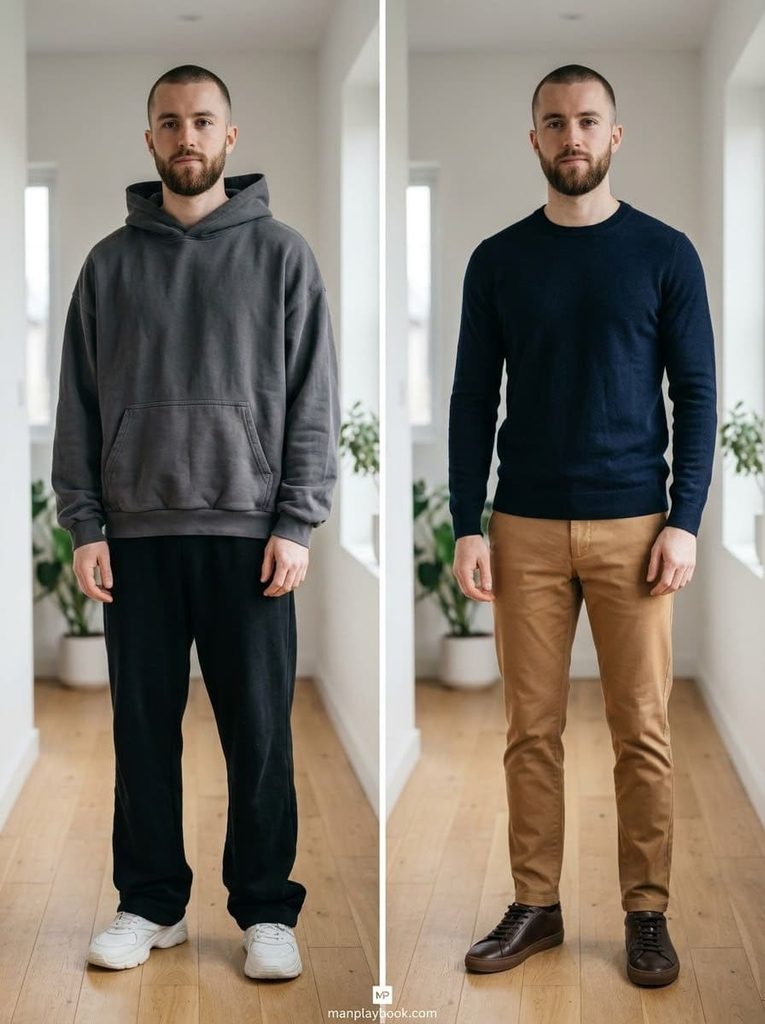
This is where most skinny guys go wrong first. The instinct is either to size up and hide the frame in baggy fabric, or to go the opposite direction into skinny-fit clothing that clings to every inch.
Both backfire. Baggy fabric has nothing underneath it to hold its shape, so it just hangs and telegraphs how little is filling it out. Skinny-fit clothing does the opposite, it shows exactly how narrow the frame actually is with nothing to soften the line.
The fix: slim fit sits in between. It follows your shoulder, chest, and waist line closely enough to look intentional, with just enough room that the fabric has its own structure instead of collapsing onto your body. That small amount of extra room is what reads as “filled out” instead of “skin-tight.”
Common mistake within the mistake: buying a size up “to be safe” and never getting it tailored. An untailored size-up shirt or jacket adds shapeless fabric at the shoulder seam, which is the one place a skinny frame needs a clean line the most.
2. Layer for texture, not just warmth
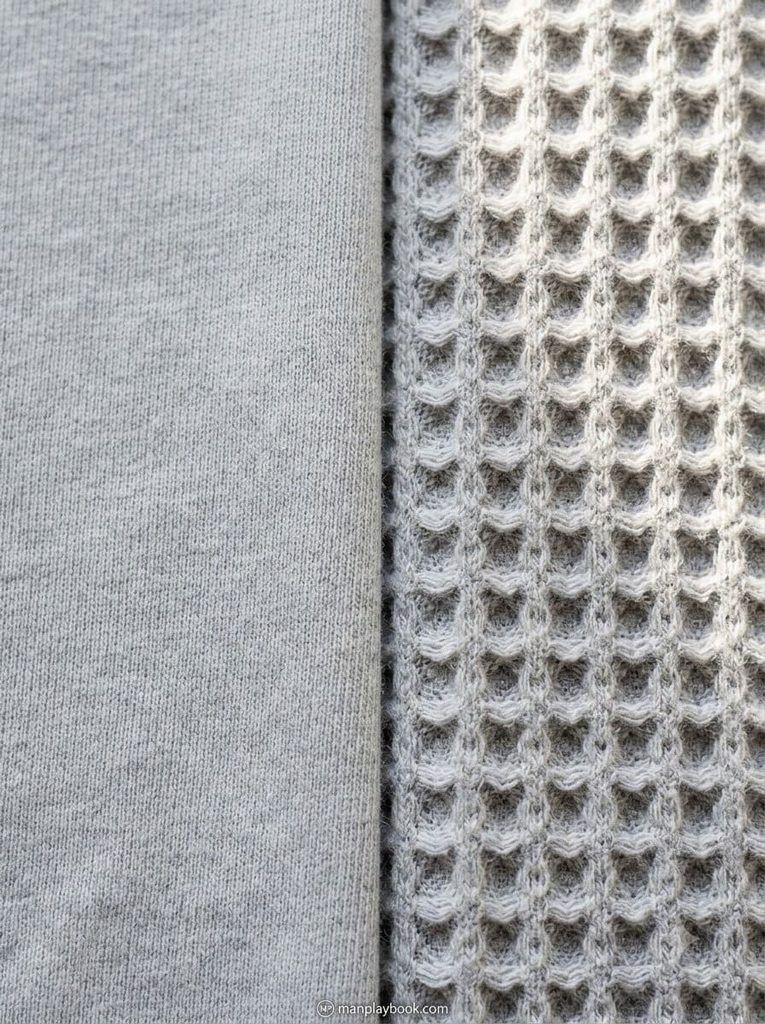
Layering gets recommended everywhere, but the “why” almost never gets explained. It’s not about warmth on a mild weekend, it’s about texture.
A single smooth layer, like a plain cotton tee, reflects light evenly across its surface, which reads as flat. A textured fabric like waffle knit, corduroy, or a brushed flannel has raised ridges and valleys, so light hits it unevenly and creates small shadows across the surface.
Textile labs measure this kind of surface variation through fabric thickness testing under ASTM D1777, the standard method for measuring how thick a fabric actually sits once you account for its weave structure, not just its weight. A textured weave measures thicker under this test than a flat weave of the same fiber content, and that physical thickness is what your eye reads as visual bulk.
The fix: build every casual weekend outfit around at least one textured layer, an overshirt, a chunky knit sweater, or a corduroy jacket, worn open or half-buttoned over a smooth base layer. The contrast between the flat tee underneath and the textured piece on top is what does the actual visual work.
Real mistake people make here: stacking two textured pieces on top of each other, like a waffle-knit henley under a chunky cable-knit sweater. Instead of reading as more visual mass, it just reads as bulky and mismatched, since neither texture gets to stand out against a flat contrast layer. One textured piece, one smooth piece, is the actual formula, not “more texture equals more mass.”

Waffle-weight corduroy in a regular (not oversized) cut, layers over a tee for real texture without adding bulk in the wrong places.
Shop NowThis post contains affiliate links. We may earn a commission on qualifying purchases at no extra cost to you.
3. Build the shoulder line with structure
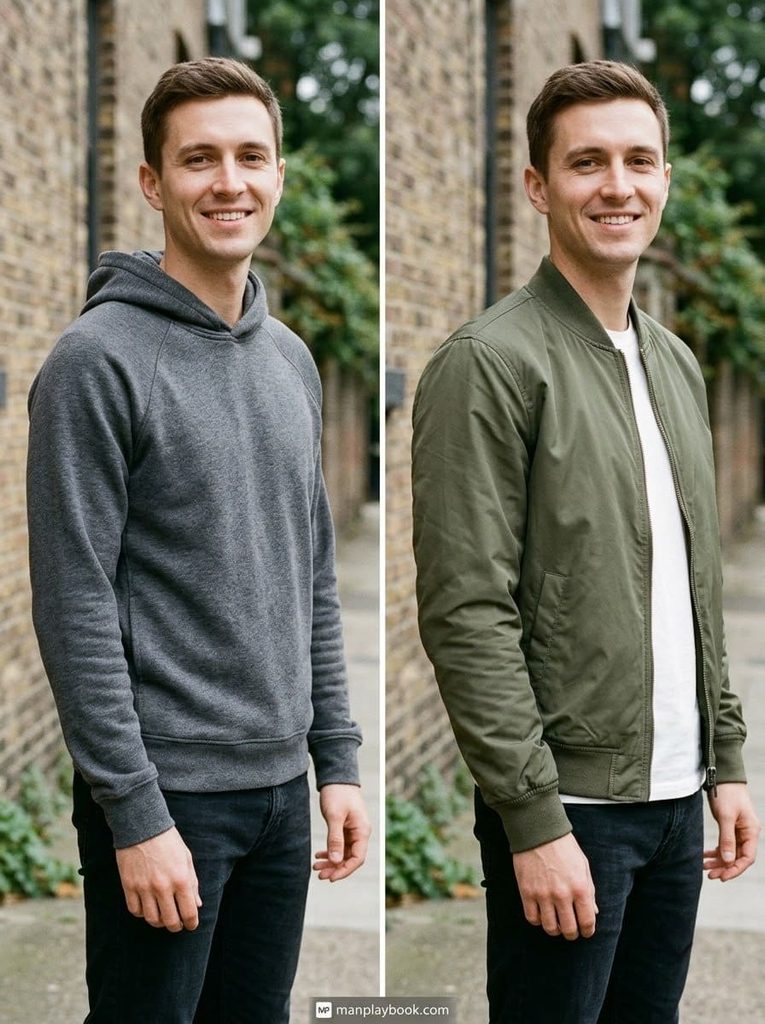
Shoulders are the single most influential line on a man’s silhouette, and it’s also the spot a skinny frame loses the most compared to a broader build.
A soft, unstructured jacket or overshirt just follows your actual shoulder bone, wherever that happens to sit. A structured shoulder, built with a light interior seam or a bit of padding sewn into the shoulder line, extends slightly past your actual bone structure and holds its shape there.
Bespoke tailors at shops like Michael Andrews build this into custom jackets specifically for this reason, a structured shoulder “broadens the upper frame” independent of what’s underneath it, while a soft shoulder just drapes over whatever’s there. You don’t need a bespoke jacket to use the same principle, a bomber jacket or field jacket with a defined shoulder seam and ribbed cuffs does the same job off the rack.
The fix: at least one piece in your casual weekend rotation should have a defined shoulder seam, not a raglan sleeve that runs in one soft diagonal line from the collar. A structured collar (not a hoodie’s soft cowl) reinforces the same effect at the neckline.
4. Keep color blocked, not cut in half
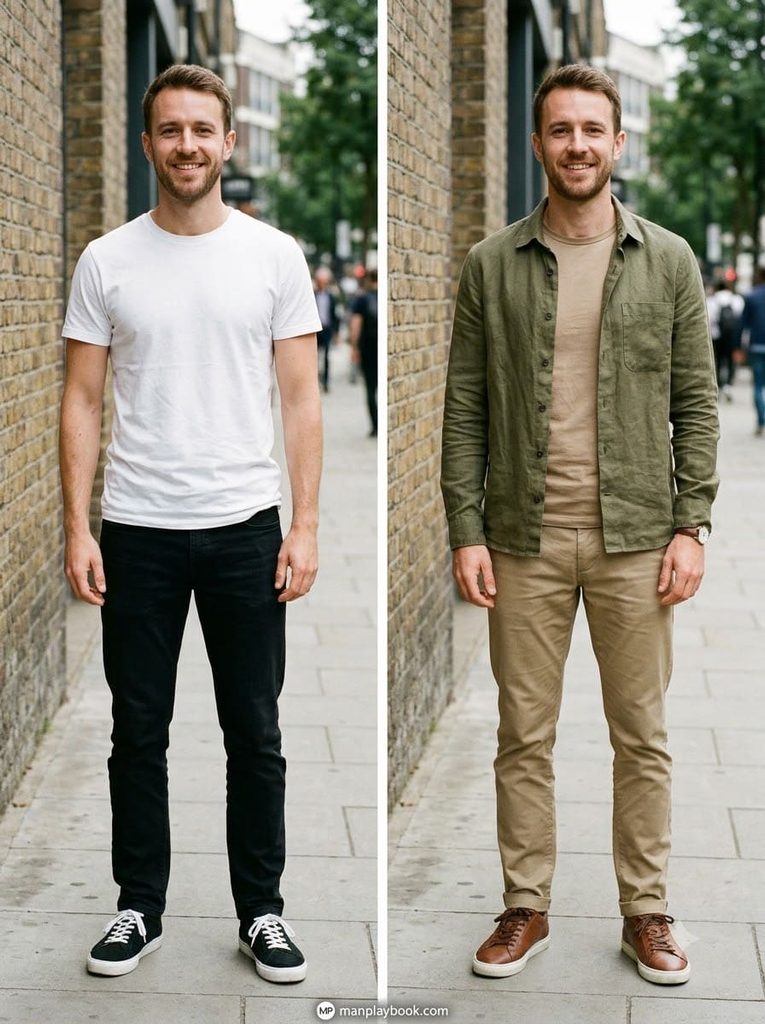
A stark contrast outfit, like a bright white tee with black jeans, visually slices your body into two separate halves at the waist. On a broader frame, that split reads as two solid blocks. On a skinny frame, it reads as two thin strips.
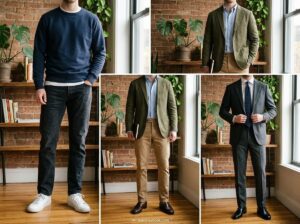
The fix: keep your top and bottom in a closer tonal range, both light, both mid-tone, or both dark, so the eye reads your outfit as one continuous shape instead of two disconnected halves. An olive overshirt over a tan tee with khaki chinos is one visual block. A white tee with black jeans is two thin ones.
Variant note: this doesn’t mean no contrast ever. A darker jacket over a lighter base still works, since the jacket itself is a textured, structured layer doing its own visual work, the rule really applies to your base layer and your pants specifically, the two flattest, largest blocks of color in any outfit.
Real mistake people make here: matching shoe color to nothing else in the outfit. A pair of bright white sneakers under a dark, tonal top-to-bottom outfit creates the exact same visual cut the color rule is trying to avoid, just moved down to ankle height. Keep footwear close to your pants’ tone, or accept that it’s doing its own separate visual job and plan around it.
5. Three real weekend outfit formulas
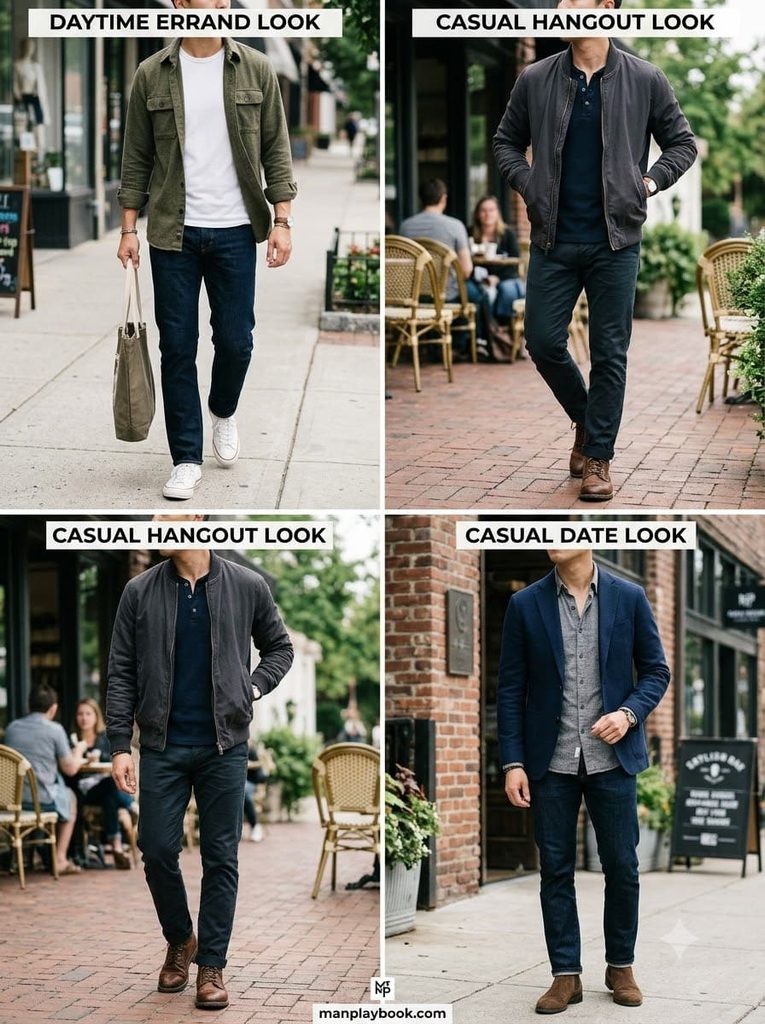
Generic outfit advice doesn’t account for what you’re actually doing on a Saturday. Here are three real formulas built around actual weekend situations, not one generic flat-lay photo.
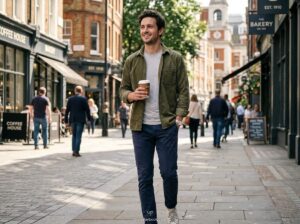
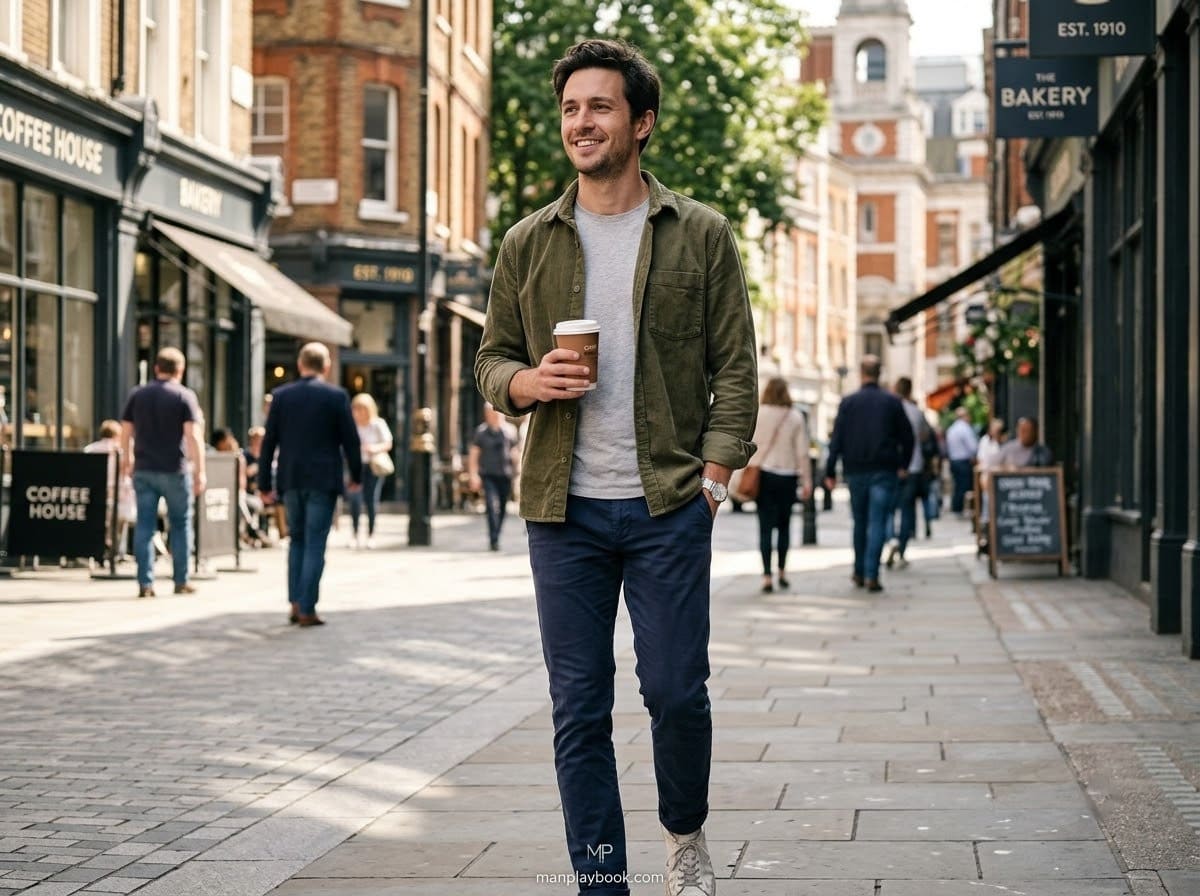
Running errands (grocery store, gas station, coffee run): slim chino or straight jean, plain tee tucked in with a French tuck (front tucked, sides left loose), textured overshirt worn fully open, white sneakers. Low effort, five minutes to put on, still reads intentional because of the overshirt’s texture doing the work.
The French tuck matters more than it sounds like it should. A fully tucked tee under an open overshirt creates a hard horizontal line right at the waist, which is exactly the kind of visual cut mistake #4 above warns about. Tucking only the front, and letting the sides sit loose, breaks that line without looking sloppy.
Hanging out with friends (afternoon, casual restaurant, walking around): slim jean, henley or crewneck tee (never a v-neck here, it narrows the chest line further), bomber jacket zipped about halfway, boots or clean sneakers. The bomber’s structured shoulder and ribbed hem carry this one.
Zip the bomber about halfway rather than all the way. Fully zipped, the ribbed hem and collar do all the visual work with nothing breaking up the front. Half-zipped, you get a visible sliver of the henley or tee underneath, which adds a second texture and color into the mix without any extra effort.
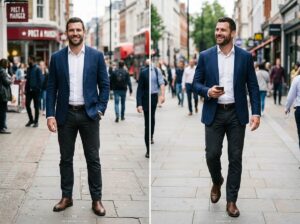
Casual date (dinner, low-key bar, evening walk): slim chino in a darker tone, button-up shirt in a slightly heavier textured weave like oxford cloth, worn untucked with the sleeves cuffed once, layered under a lightweight structured jacket. This is the most “put together” of the three without tipping into overdressed.
Cuff the sleeves exactly once, not rolled up multiple times. One clean cuff shows a bit of forearm and adds a visual break at the wrist without looking like you’re about to do manual labor. Rolling higher starts to read as costume rather than casual.
Tiered version: if you only have time for one change before heading out, add the textured overshirt or jacket. It does more visual work per minute of effort than any other single swap on this list. If you have a bit more time, add the second step, swap a flat sneaker for a boot with some actual sole height and structure, since footwear silhouette carries more visual weight than most guys give it credit for.
Variant note for cold weather: swap the lightweight bomber for a heavier shearling-collar or quilted version, and add a scarf in a color close to your jacket’s tone. The scarf does double duty, it adds another textured layer around your neck and shoulders, which is exactly the zone this whole guide is built around reinforcing.
6. Mistakes worth skipping entirely
A few specific choices work against everything above, worth naming directly instead of just implying them.
V-neck tees and henleys worn unbuttoned narrow the visual width of your chest exactly where you want it to look broader, the V shape draws a line straight down the center of your torso. A crewneck keeps a flat horizontal line across the collarbone instead.
Fully oversized, unstructured everything (an oversized hoodie with oversized joggers) removes every structural line your outfit could be using. There’s nothing wrong with a relaxed silhouette occasionally, but head-to-toe oversized on a skinny frame with no textured or structured piece anywhere just reads as fabric with nobody really filling it.
Skinny jeans with an already-fitted top doubles down on the narrowest possible read at both ends. Pair a slim (not skinny) jean with your textured or structured top instead, so at least one half of the outfit is doing visual work.
7. Match fabric weight to the actual season
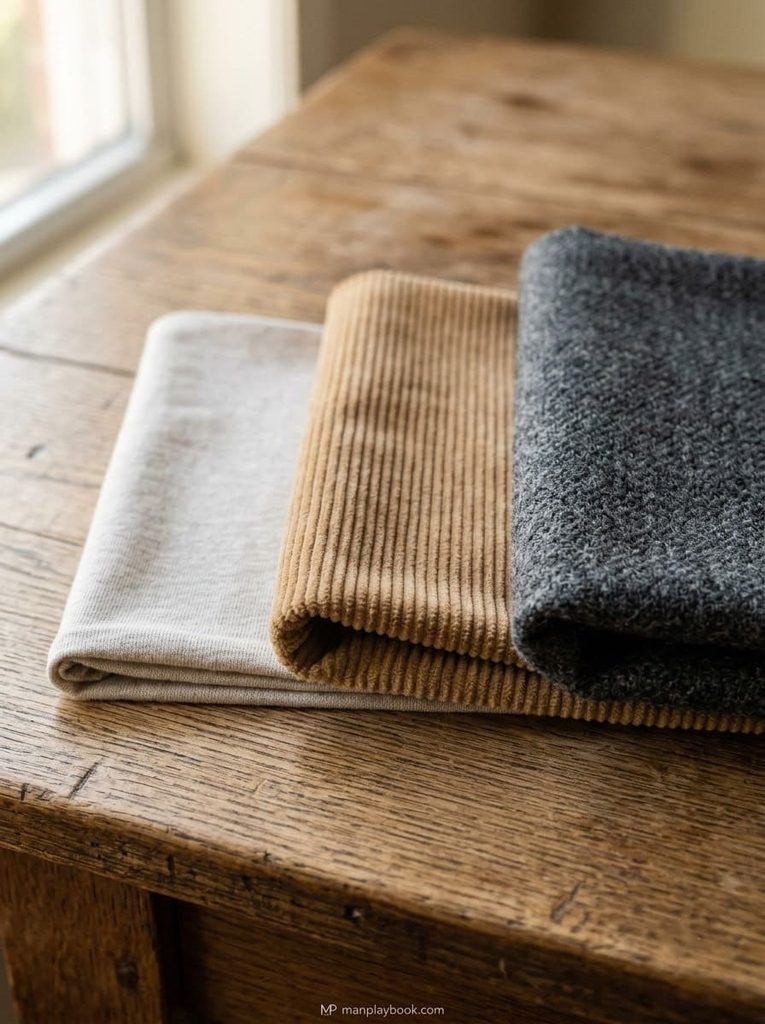
Everything above works better or worse depending on what fabric you’re actually wearing it in, and this is the part most guides skip entirely because it’s less fun to write about than “wear a leather jacket.”
Fabric weight is measured in grams per square meter (GSM). A summer tee usually runs 140-160 GSM, light enough to breathe but too thin to hold any real texture or shape. A midweight flannel or corduroy sits closer to 200-280 GSM, heavy enough to have visible structure without becoming a winter coat. Heavier wool or quilted pieces run 300 GSM and up.
The fix: for spring and fall casual weekends, aim for that 200-280 GSM midweight range in your main layering piece, a flannel, corduroy overshirt, or midweight knit. It’s the sweet spot where fabric actually has enough body to hold texture without overheating you the moment you step indoors.
Real mistake people make here: buying a heavy statement jacket for cold weather and nothing in between for the shoulder seasons, which are honestly when most casual weekends actually happen. A lightweight tee in July and a heavy parka in January doesn’t help you the other nine months of the year, and that’s exactly where a midweight textured overshirt earns its keep.
Tiered version, by budget: if you can only own one textured layering piece, buy it in a neutral tone (olive, tan, or charcoal) at the 200-280 GSM range, since it’ll cover the most weekends across the most months. A second piece, once budget allows, should fill whichever end (lighter for warm weather or heavier for cold) your climate actually needs most.
8. What to actually check on a product page before buying
A few specific details on a listing tell you more than the product photo ever will, and checking them takes about thirty seconds once you know what to look for.
Fabric content and weight. Look for the GSM number if it’s listed, or at minimum the fiber content. “100% cotton” with no weight given is a coin flip, it could be a thin 140 GSM tee or a heavier 240 GSM shirt, and the photo won’t tell you which.
The word “regular” or “classic” in the fit name, not just the size chart. A listing that only offers “slim” and “oversized” as fit options, with no true regular or classic-fit version, is a signal the brand is designed around extremes, not the middle-ground fit this guide is built around.
Shoulder seam construction, mentioned in the product description. Terms like “structured shoulder,” “set-in sleeve,” or “defined shoulder seam” indicate the jacket holds its own shape. “Raglan,” “drop shoulder,” or no mention at all usually means a softer, unstructured line.
Model height and size worn, listed near the photos. If a 6’2″ model is wearing a size small to make a garment look fitted in photos, that tells you almost nothing about how it’ll actually sit on your frame. Cross-check against the actual measurement chart, not just how it looks on the model.
The pattern behind it all
If there’s one idea to take from all of this, it’s that “add bulk” isn’t really the goal, “add visual structure” is. A textured fabric, a defined shoulder seam, and a tonal color block all do the same job from different angles: they give your outfit its own shape instead of just following whatever your body happens to be doing underneath it.
I’ll admit I expected this to be more about picking the right colors. It’s mostly about fabric weight and shoulder construction, which, again, is kind of a relief, because that’s something you can actually check on a product page before you buy, not something you have to guess at in a fitting room.
FAQs
Do skinny guys really need to avoid v-necks completely? Not completely, but a crewneck is the safer default for building width at the chest and collarbone. Save v-necks for layering under an open overshirt or jacket, where the V isn’t the only line your eye sees.
Is it worth tailoring clothes bought off the rack? Yes, especially shoulders and sleeve length. A jacket or shirt that’s the right width in the shoulder but slightly long in the body is a much easier and cheaper tailoring fix than one that’s the wrong width everywhere.
What’s the single highest-impact change from this list? Adding one textured, structured outer layer to an otherwise plain outfit. It’s the fastest way to add visual mass without changing your body or your entire wardrobe.
What fabric weight should I actually look for when shopping online? Aim for 200-280 GSM in your main layering piece for most of the year, a flannel, corduroy overshirt, or midweight knit. That’s heavy enough to hold real texture and structure without being a full winter coat, and it covers spring, fall, and mild winter weekends.
Products We Recommend
This post contains affiliate links. We may earn a commission on qualifying purchases at no extra cost to you.
Amazon Essentials Men's Regular Fit Corduroy Overshirt
Waffle-weight corduroy in a regular (not oversized) cut, layers over a tee for real texture without adding bulk in the wrong places.
Shop Now
Rdruko Lightweight Bomber Jacket
Ribbed collar, cuffs, and hem give it a defined shoulder-to-waist line, which is the exact silhouette a slim build benefits from in outerwear.
Shop now
Amazon Essentials Men's Slim-Fit All-Day Stretch Chino
Slim, not skinny, with stretch for actual movement, the fit this whole guide is built around for the bottom half.
Shop nowNever miss an update — choose ManPlaybook as your preferred source on Google.
How it works: Tap the button below to open Google's settings page, then check the box next to ManPlaybook.
Tap the checkbox to turn it blue — that's how you know it's set.