The French Crop Haircut: What to Ask For and How to Style It
A complete guide to the French crop haircut. The exact words to use with your barber, how to style it at home, and 35 variations organized by fade height, fringe style, and hair type.
Never miss an update — choose ManPlaybook as your preferred source on Google.
How it works: Tap the button below to open Google’s settings page, then check the box next to ManPlaybook.
Tap the checkbox to turn it blue — that’s how you know it’s set.
I went bald young, so this isn’t a haircut I’ve personally worn. But I’ve spent years turning things nobody explains clearly into a system anyone can follow, and this haircut is a good example of that gap. Guys walk into a barbershop, say “French crop,” and get three different results depending on who’s holding the clippers.
This guide fixes that. The exact terms that get you the right cut. The styling steps that actually work at home. And 35 variations, so “French crop” stops being one vague request and starts being a specific choice.
Quick answer
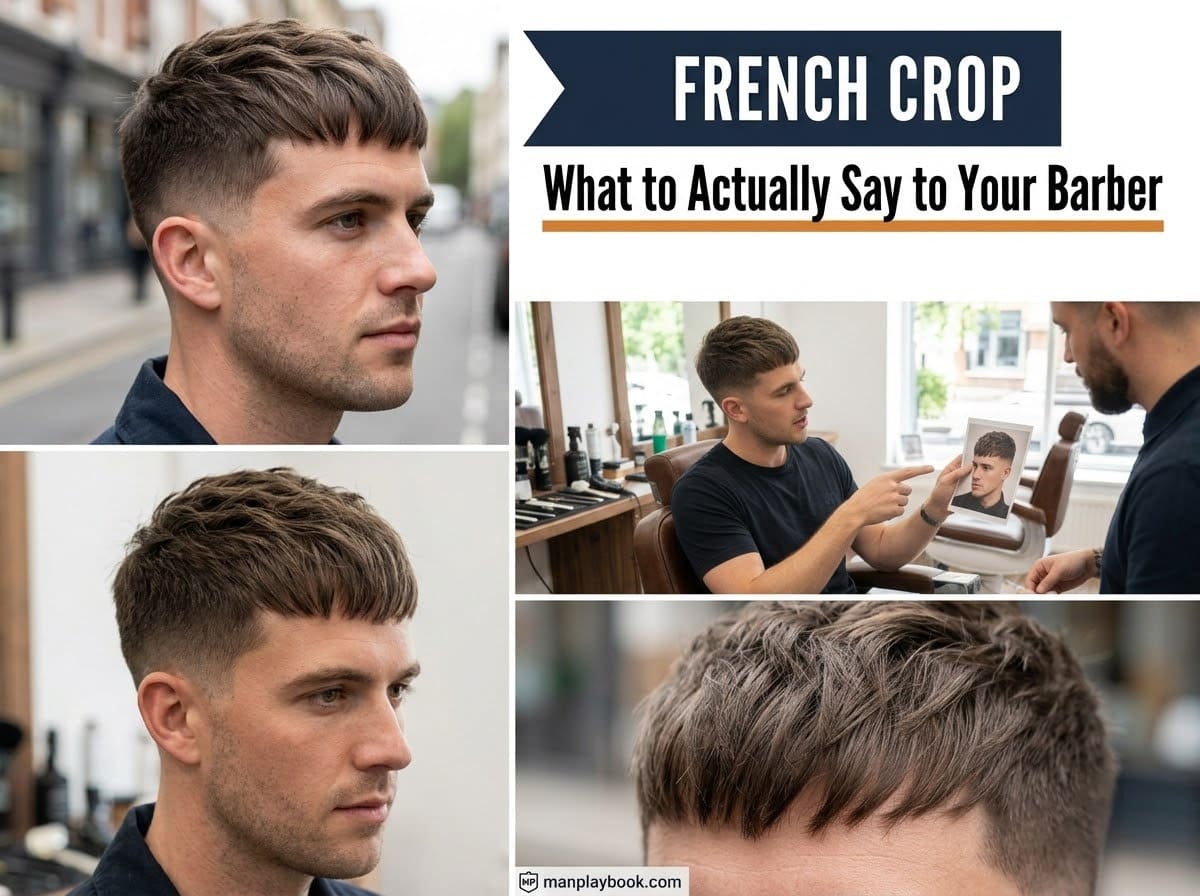
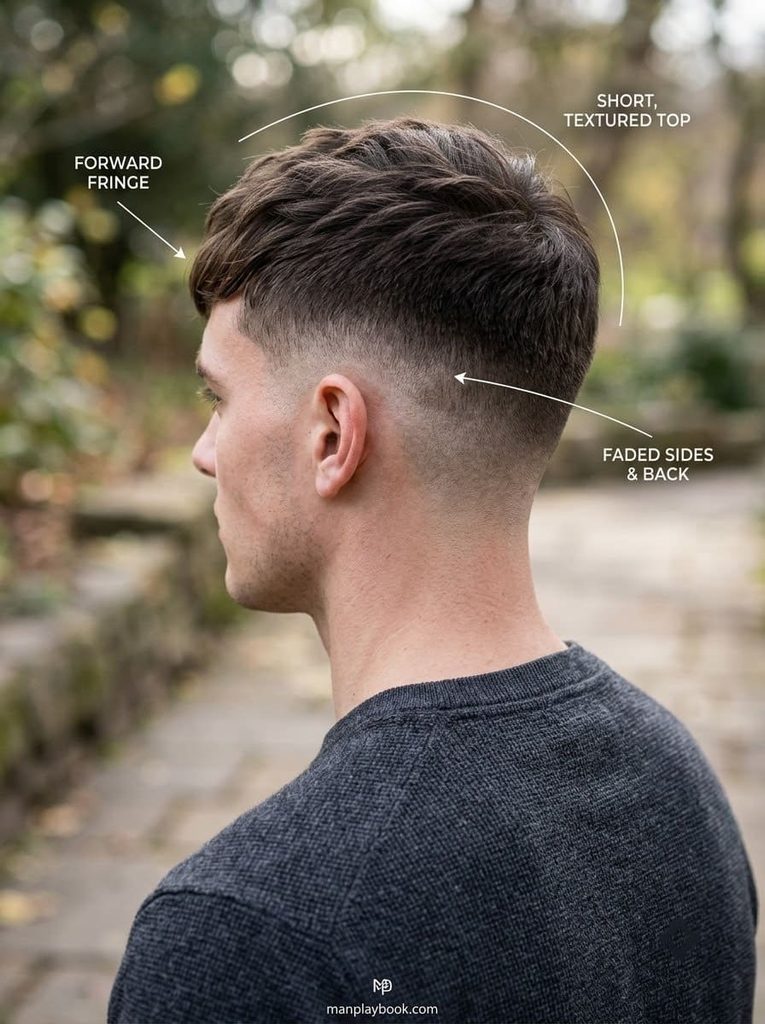
A French crop is short, faded or tapered sides paired with a blunt or textured fringe cut straight across the front. The hair sits shorter at the hairline. It grows slightly longer toward the crown, the opposite of a style that’s long in front and short in back.
To get it right, tell your barber three things. The fade height (skin, low, mid, or high). The fringe style (blunt, textured, or side-swept). And the top length in inches, not just “short” or “medium.” Style it with matte clay worked into damp hair. Push it forward and slightly down, not swept back.
The core cut, explained
A French crop has three parts, and naming all three is what separates a specific request from a guess.
The sides and back get cut short, either faded (clippers blending skin to hair) or tapered (a shorter, less dramatic blend). A skin fade removes hair down to the scalp at the bottom. A taper leaves a bit of length throughout.
The top stays short overall, usually one to two inches. It’s cut shorter at the front hairline and slightly longer moving back toward the crown. This is the detail most guys skip mentioning, and it’s the one that actually defines the cut.
The fringe sits at the front. It’s cut either blunt, a straight, defined line across the forehead, or textured, broken up with point-cutting or a razor so the ends look feathered instead of solid.
Real mistake people make here: asking for a French crop and only describing the top length, without specifying the fringe style. A blunt fringe and a textured fringe change the entire read of the haircut, even at the exact same length.
What to actually say to your barber
Vague requests get vague results. Here’s language that gets a specific outcome.
Start with the fade or taper. “Skin fade on the sides” or “a low taper, not a full fade” tells your barber exactly how aggressive to go with the clippers before touching the top.
Name the guard number if you know it. A 1 or 2 guard on the sides, blending into a 3 or 4 at the crown, gives a barber an actual starting point instead of a guess based on “short.”
Describe the fringe specifically. “Blunt fringe, cut straight across” reads completely differently to a barber than “textured fringe, choppy ends.” Say which one you actually want. Don’t just say “a fringe.”
State the top length in inches or centimeters, not just “short” or “medium.” One inch and two inches produce noticeably different amounts of texture and movement once styled.
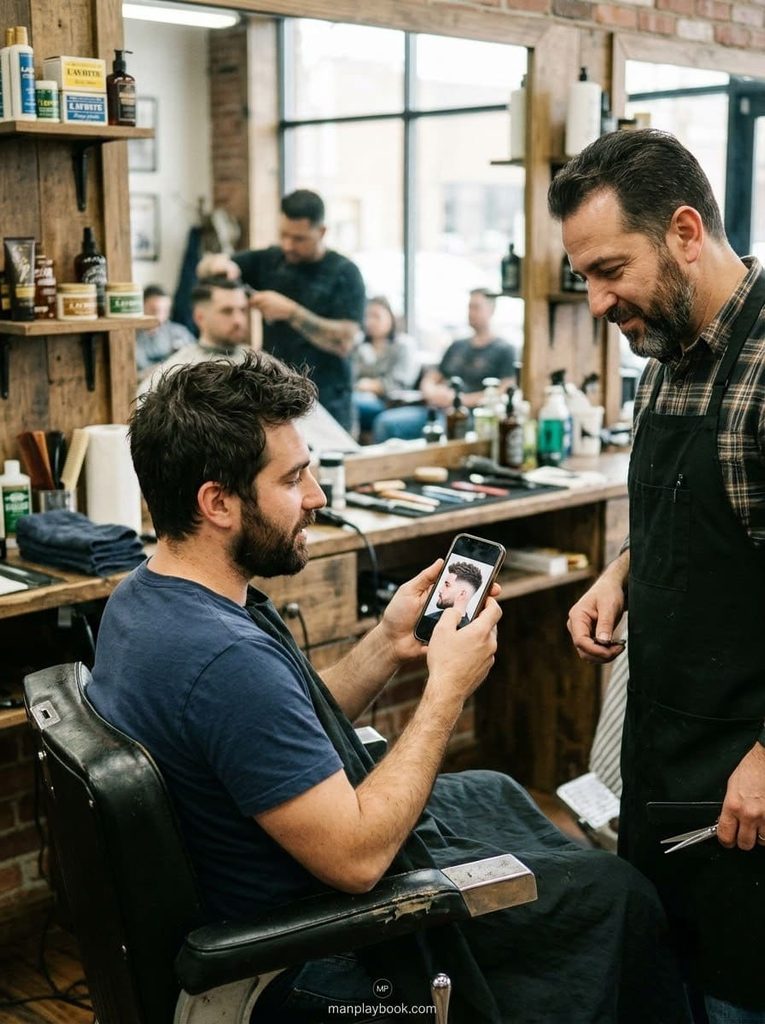
Real mistake people make here: bringing a photo but not translating it into words. A photo helps. Describing the fade height, fringe style, and top length out loud confirms your barber saw the same details you did.
Who this haircut actually works for
A French crop isn’t universal, and knowing where it works saves a wasted haircut.
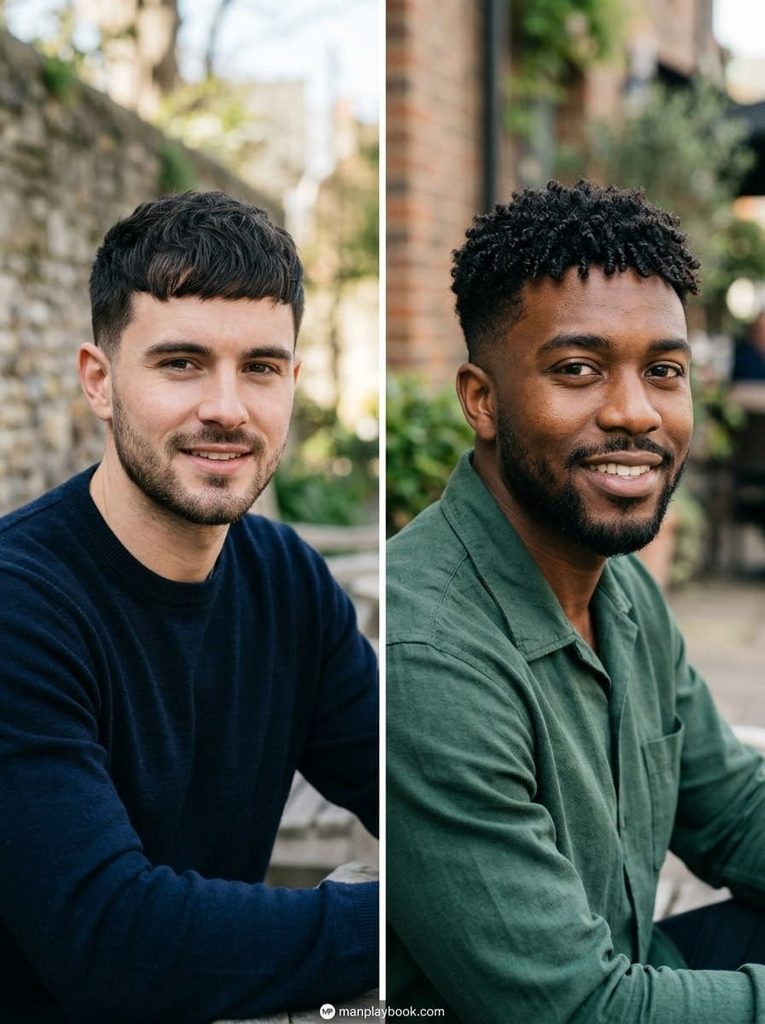
Straight to slightly wavy hair holds the fringe shape best. Very curly or coily hair can still work. The fringe reads more textured by default and holds a different shape than a straight-hair fringe does.
A rounder or square face benefits most from a blunt, straight-across fringe, since the hard horizontal line adds visual length. An oval or longer face has more room to go textured or side-swept. It doesn’t need the extra length.
Fine or thin hair does better with a shorter top, since more length on thin hair can look flat instead of textured. Thicker hair carries a slightly longer top. It holds more visible texture in the fringe.
Real mistake people make here: copying a photo of a French crop on a completely different hair type without adjusting the fade height or top length. The same haircut on fine straight hair and thick curly hair needs different starting numbers to land the same way.
How to style it at home
The cut does most of the work. Styling just finishes it.
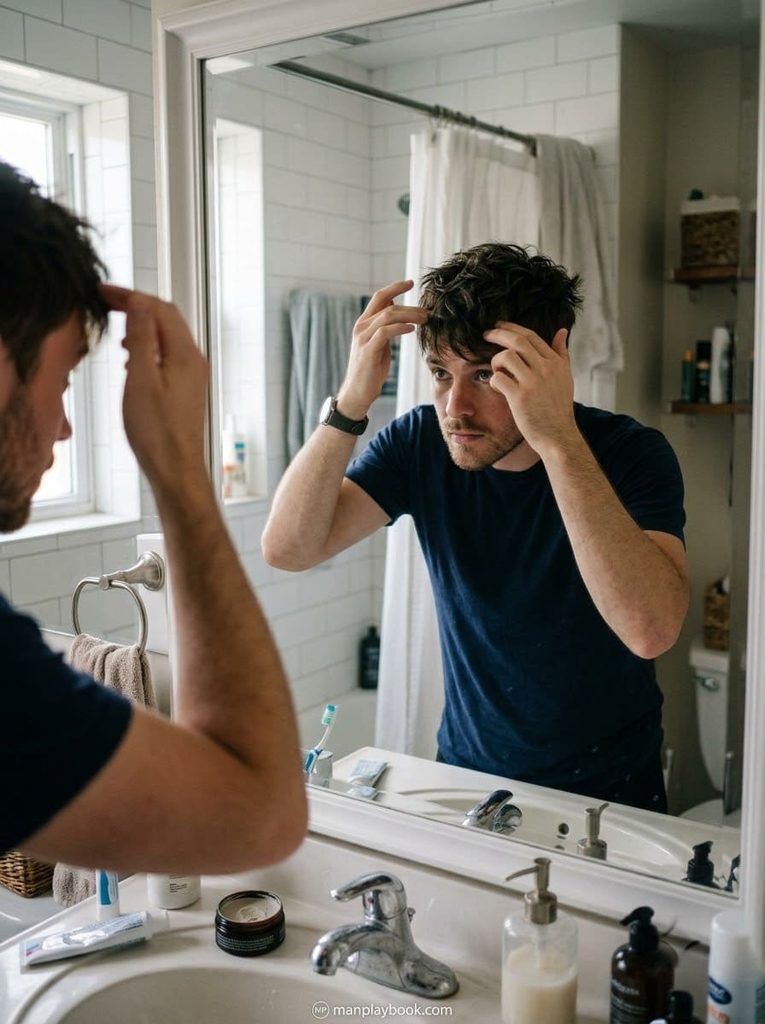
Start with damp, not wet, hair. Product distributes more evenly on damp hair. It holds better once the hair fully dries, compared to working product into soaking wet hair.
Use a matte clay or paste, not a shine-heavy pomade. A French crop reads cleaner with a flat, natural finish. A high-shine product can make the fringe look wet or greasy.
Push the fringe forward and slightly down, not straight back. The forward direction is what makes a French crop read as a French crop. Pushed straight back, the same haircut just looks like a regular short cut. No fringe, no French crop.
Blow-dry the fringe forward first, then apply product. Heat sets the direction before product locks it in place. Applying product to hair that hasn’t been dried the right way fights the style instead of holding it.
Tiered version: if you only have thirty seconds, damp hair plus a small amount of clay pushed forward covers the basics. The blow-dry step adds hold and lasts longer through a full day. Worth it for anything beyond a quick weekday morning.
Real product picks for styling
Two products cover most of what a French crop actually needs.
| Product | Why it’s here |
|---|---|
| Cremo Hair Clay Pomade, High Hold Matte Finish | A matte finish, not a shine-heavy one. Built for the flat, textured look this haircut needs. |
| Viking Revolution Sea Salt Texturizing Spray | Adds volume and texture before the clay goes in, useful for fine or thin hair specifically. |
What it costs and how to book it
A French crop isn’t a specialty cut, so it shouldn’t cost specialty prices. Most barbershops treat it as a standard men’s haircut with a fade, somewhere between $25 and $60 depending on the shop and the city. A high-end barbershop with a lounge and a beard trim included runs higher. A no-frills strip-mall barbershop runs lower, and either one can produce a great French crop if the barber understands the three parts.
Book with a barber who does fades regularly, not just trims. A French crop lives or dies on the fade or taper on the sides. A barber who mostly does basic trims and clipper-over-comb cuts may not have the steady hand a clean fade needs. Check a shop’s Instagram or Google reviews for fade work specifically before booking a first appointment.
Ask for 15 to 20 extra minutes on a first visit. The first cut takes longer since the barber is figuring out your hair’s growth pattern and density. Rushing that first appointment is how guys end up with a fade that’s too aggressive or a fringe that’s too short to work with later.
Tip 15 to 20 percent if the cut matches what you asked for. Standard barbershop etiquette applies here the same as any other haircut. A barber who took the time to confirm fade height, fringe style, and top length before cutting earned that tip more than one who just started clipping.
How often to get it cut
Every three to four weeks keeps the shape clean. The fade grows out fastest, since it’s cut closest to the skin. A fringe can stretch a bit longer between cuts. But the fade line softens and blurs well before the fringe looks overgrown.
Real mistake people make here: waiting until the whole haircut looks overgrown before booking the next appointment. The fade line is the first thing to go, usually two to three weeks in, well before the top or fringe need attention.
35 variations to choose from
“French crop” covers a lot of ground. These are organized by the detail that actually changes, not just listed as 35 photos with no structure.
By fade height (8 variations). Each one changes how dramatic the sides read, from nothing left to a soft blend.
1. Skin fade

Hair fades all the way down to bare skin at the bottom, the most dramatic contrast against the top. Ask for a 0 guard blending into a 2 or 3 by mid-ear. Get it touched up every 2-3 weeks, the skin line grows out fastest of any fade.
2. High fade

The blend starts well above the ear, leaving more visible length on the sides than a skin fade. Tell your barber the blend point in finger-widths above the ear, not just “high.” It holds its shape 3-4 weeks between cuts.
3. Mid fade

The blend starts around ear level, a middle ground between dramatic and subtle. This is the safest first-timer request, ask for a mid fade with the blend starting at the ear. Works with almost any top length.
4. Low fade
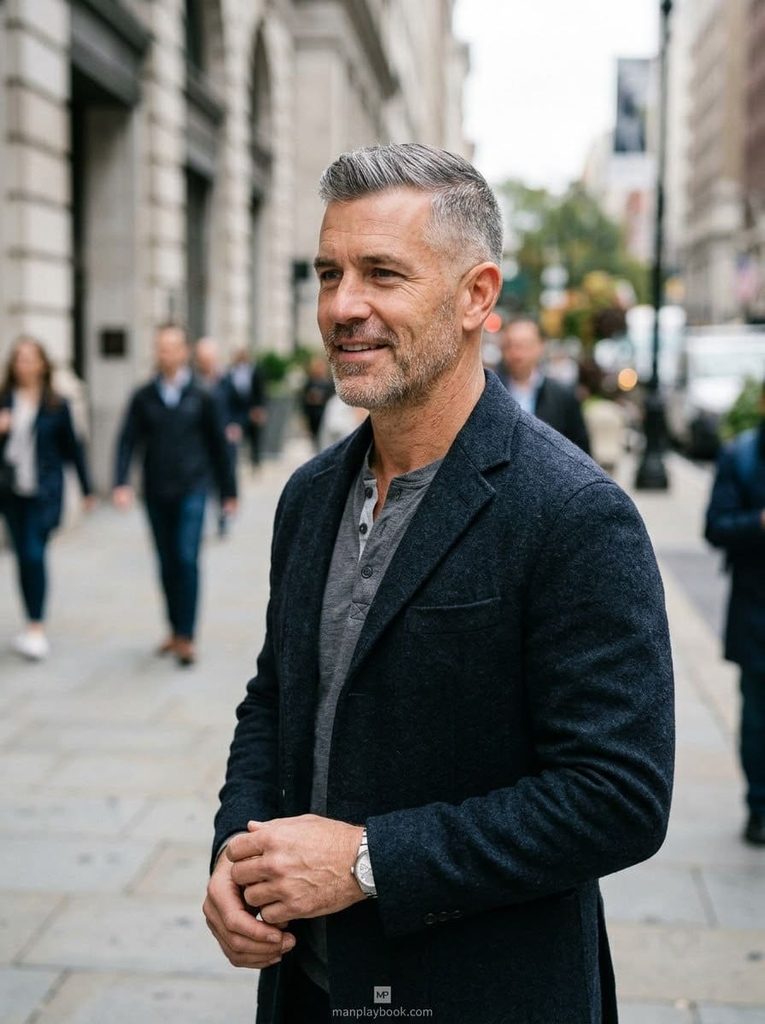
The blend starts just above the hairline, the most subtle version of a true fade. Good for office settings where a high-contrast fade reads too aggressive. Ask for a low fade and keep it soft.
5. High taper
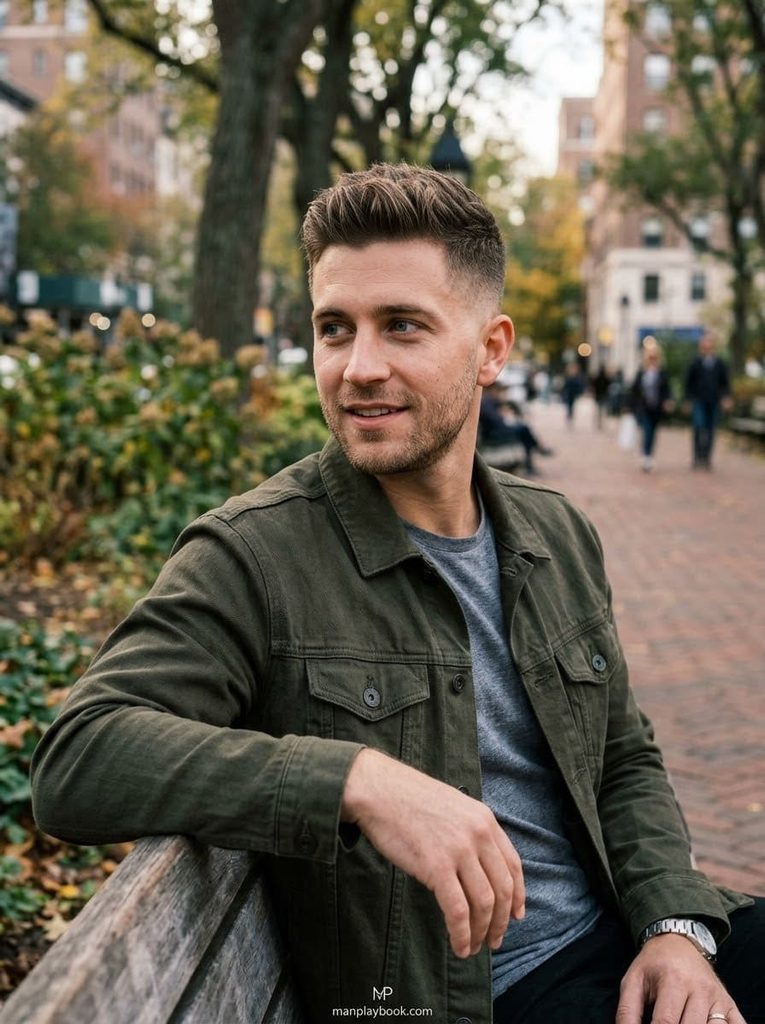
Shorter through the sides but no bare skin showing, blended high with clippers only. A taper grows out more gracefully than a fade, ask for one if you go 5+ weeks between cuts.
6. Mid taper
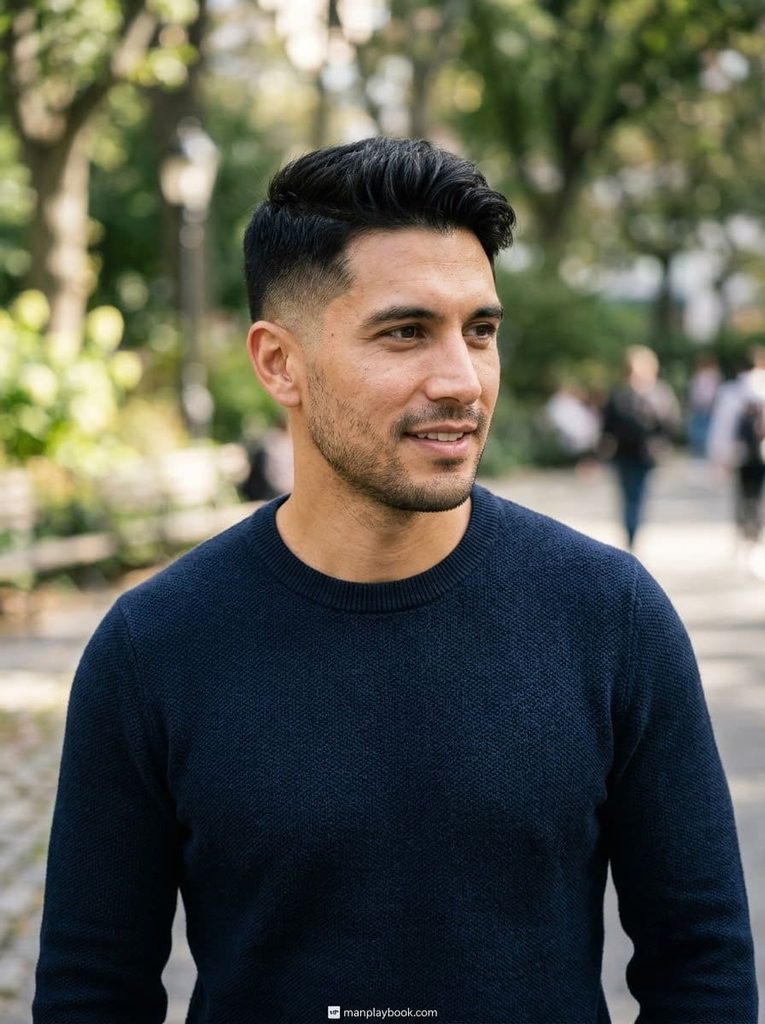
The same soft blend as a high taper, just started at mid-height instead. Pair with a slightly longer top for a softer, less severe overall look.
7. Low taper
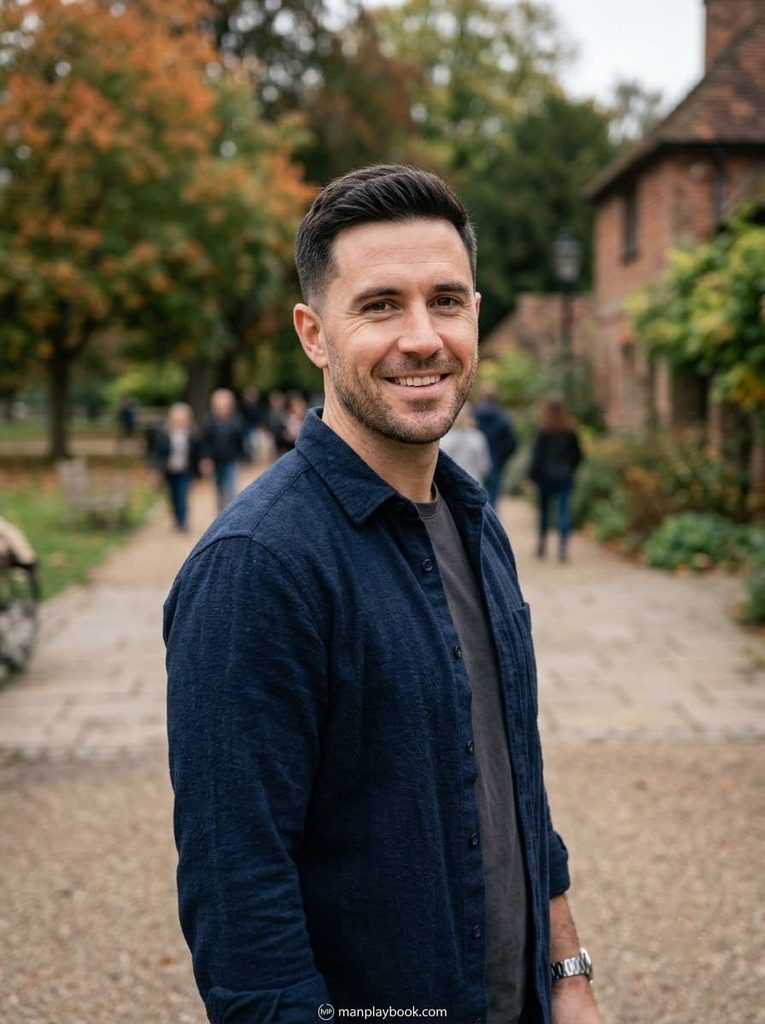
The softest, most subtle version, barely a change in length from top to bottom. Ask for a low taper with almost no contrast if you want the fringe to be the only statement piece.
8. Disconnected undercut
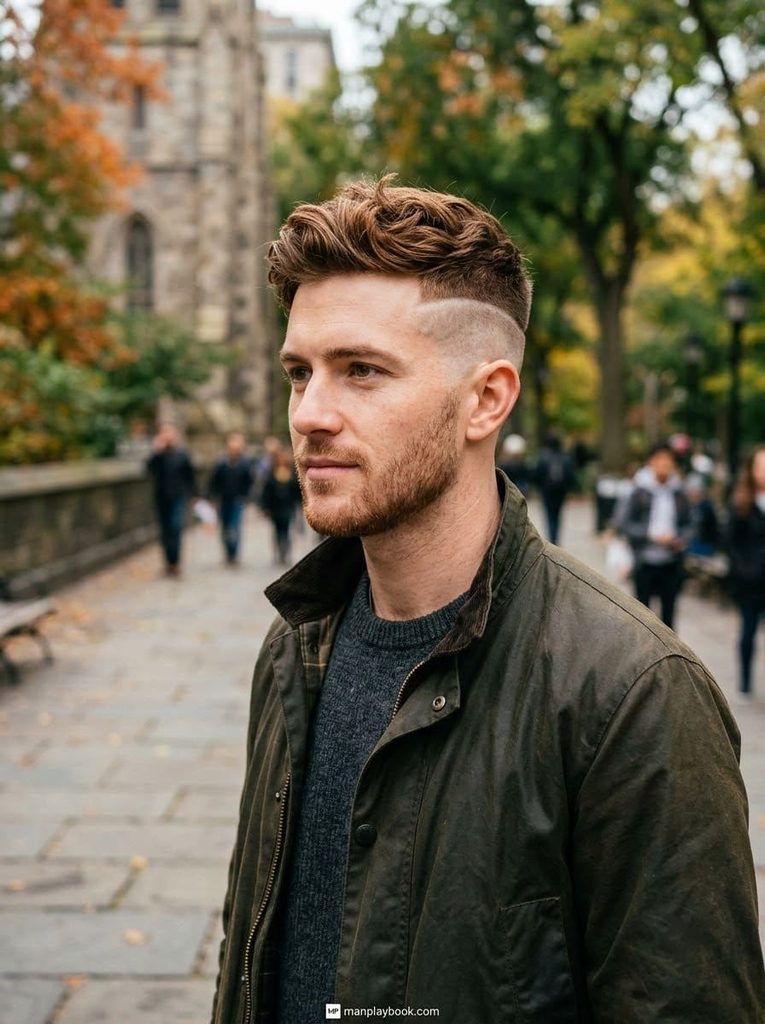
The sides drop dramatically short with no gradual blend at all, a hard line instead of a fade. This is the boldest version, confirm the exact drop point with your barber before they start, it can’t be undone in one visit.
By fringe style (8 variations). The fringe is the part most guys describe the least clearly, so this is worth reading closely.
9. Blunt fringe
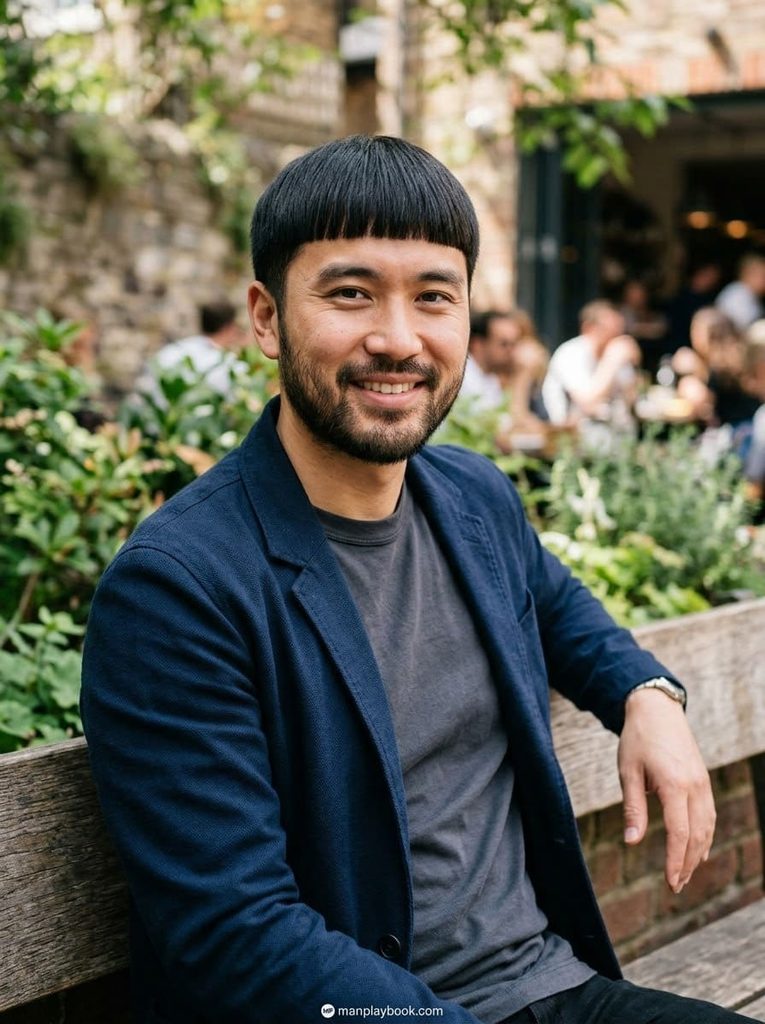
Cut straight across with no texture, the cleanest and most defined version of the front. Style it dry with a comb for a sharp, geometric line, or damp with clay for a softer version of the same shape.
10. Softly textured fringe

A light break in the line, point-cut just enough to soften the edge. Work a small amount of matte clay through damp hair, pushing forward without combing it flat.
11. Heavily textured fringe
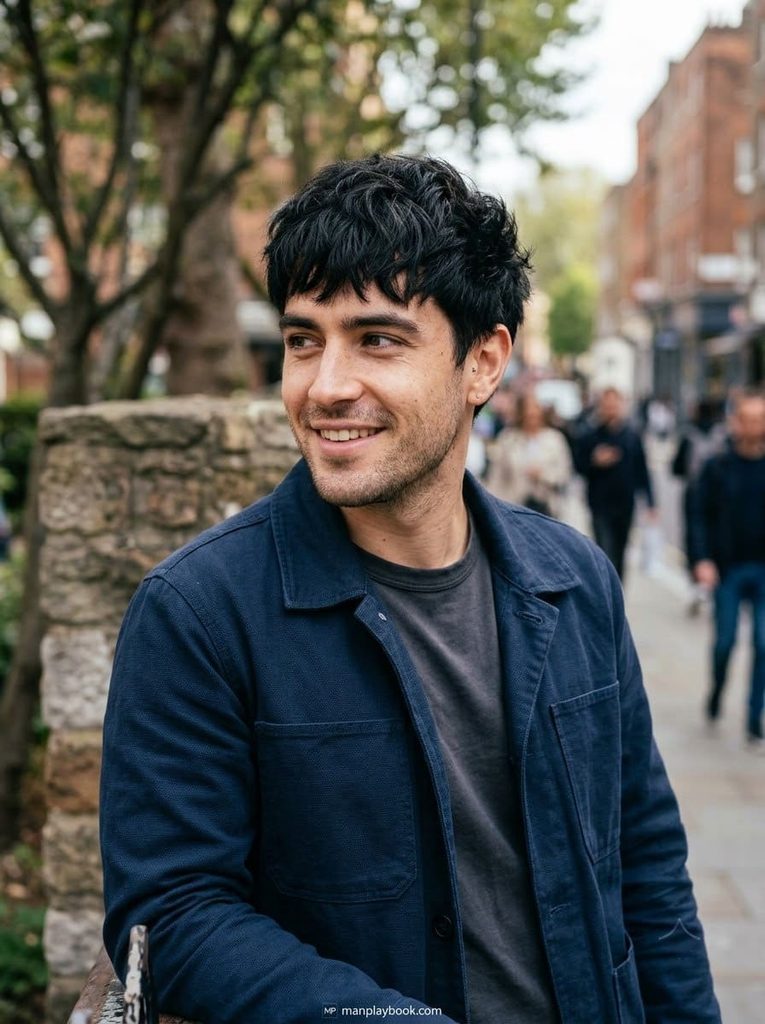
Choppy ends throughout, cut with a razor or heavy point-cutting for a deliberately broken-up finish. Use a texturizing spray before the clay, it adds the separation this version depends on.
12. Side-swept fringe

Angled instead of straight down, a diagonal line across the forehead. Blow-dry the fringe to one side while it’s damp, then set the direction with a light-hold paste.
13. Micro-fringe
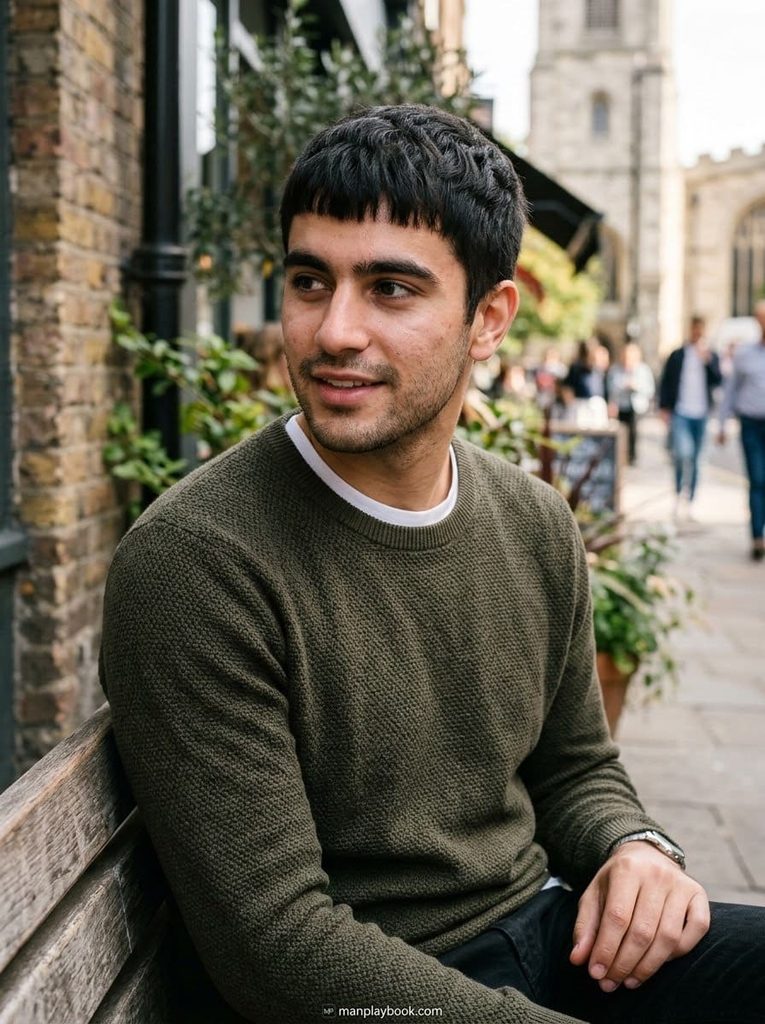
Short enough to barely clear the eyebrows, a compact version for guys who don’t want much forward length. Minimal product needed, a small amount of clay pushed forward is enough to hold this length.
14. Long fringe

More forward length than the standard cut, reaching further down the forehead. Blow-dry forward first to build hold before applying product, longer fringes need more structure to stay in place all day.
15. Hard-part fringe
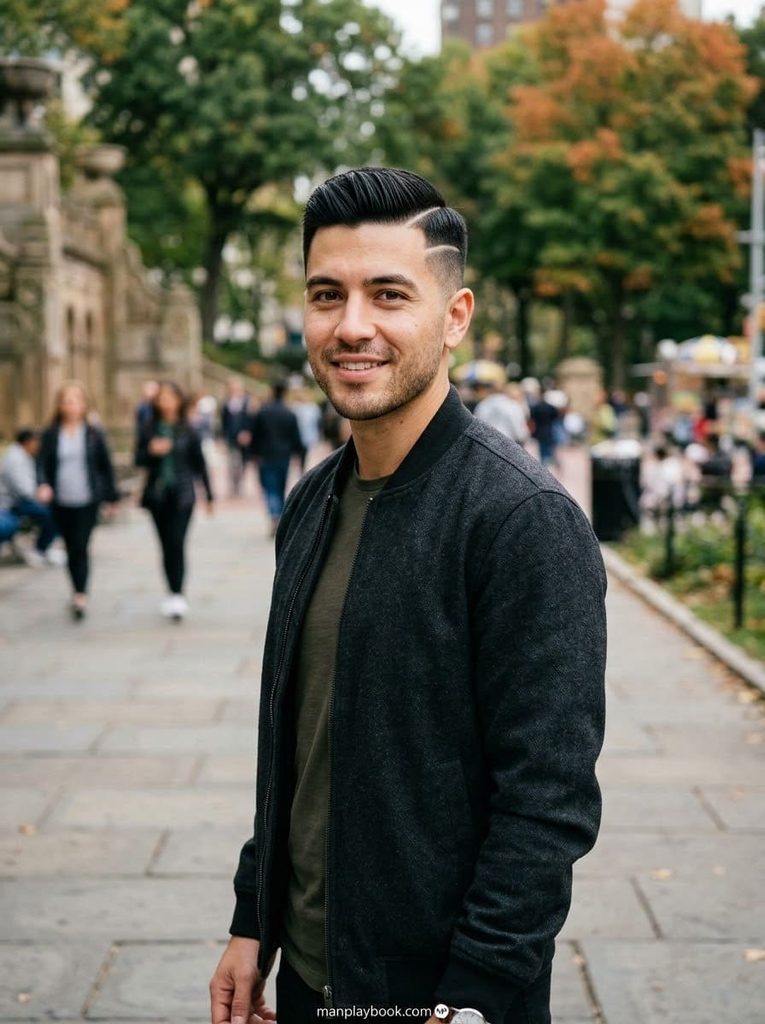
A shaved line cut into one side, adding a sharp graphic detail to the front. Keep the part line touched up every 2 weeks, it grows out faster than the rest of the cut.
16. Messy fringe

No defined line at all, deliberately undone for a lived-in look. Scrunch a small amount of sea salt spray into damp hair and let it air-dry instead of styling it flat.
By beard pairing (6 variations). The beard changes how sharp or soft the whole face reads.
17. Clean-shaven
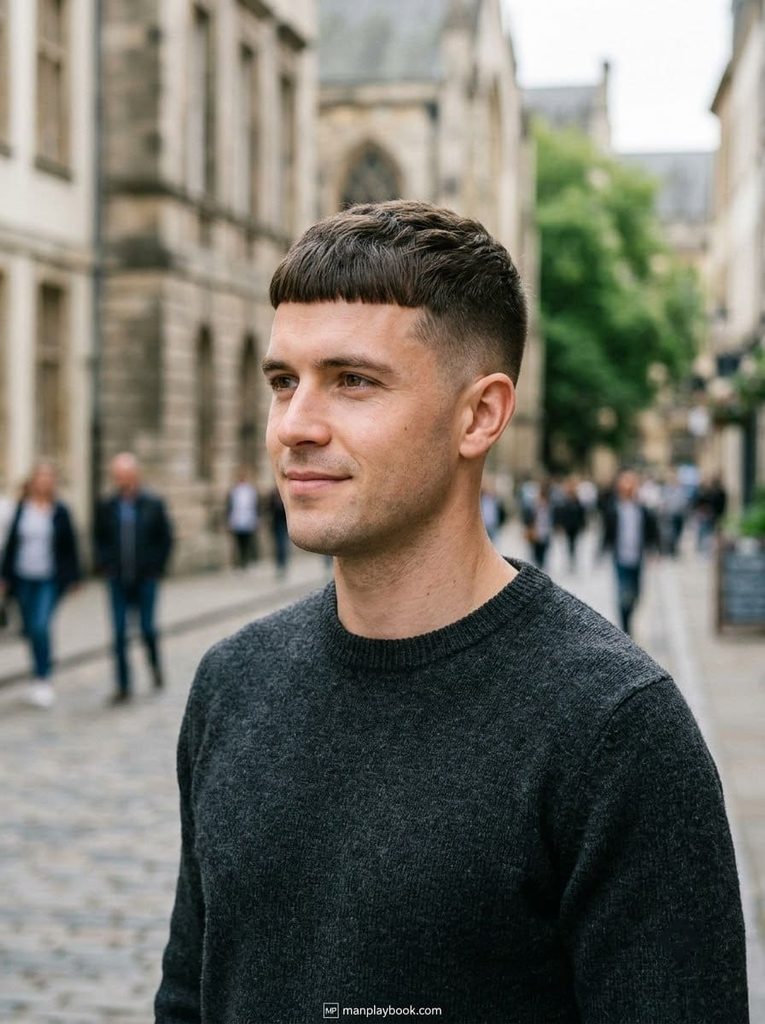
No facial hair, letting the haircut carry the whole look on its own. A clean shave draws more attention to the fringe line, keep it crisp and well-defined for this pairing.
18. Light stubble

A few days of growth, softening the jawline without committing to a full beard. Trim stubble to a consistent length with a guard, uneven stubble competes with a clean fringe line instead of complementing it.
19. Full beard, hard line
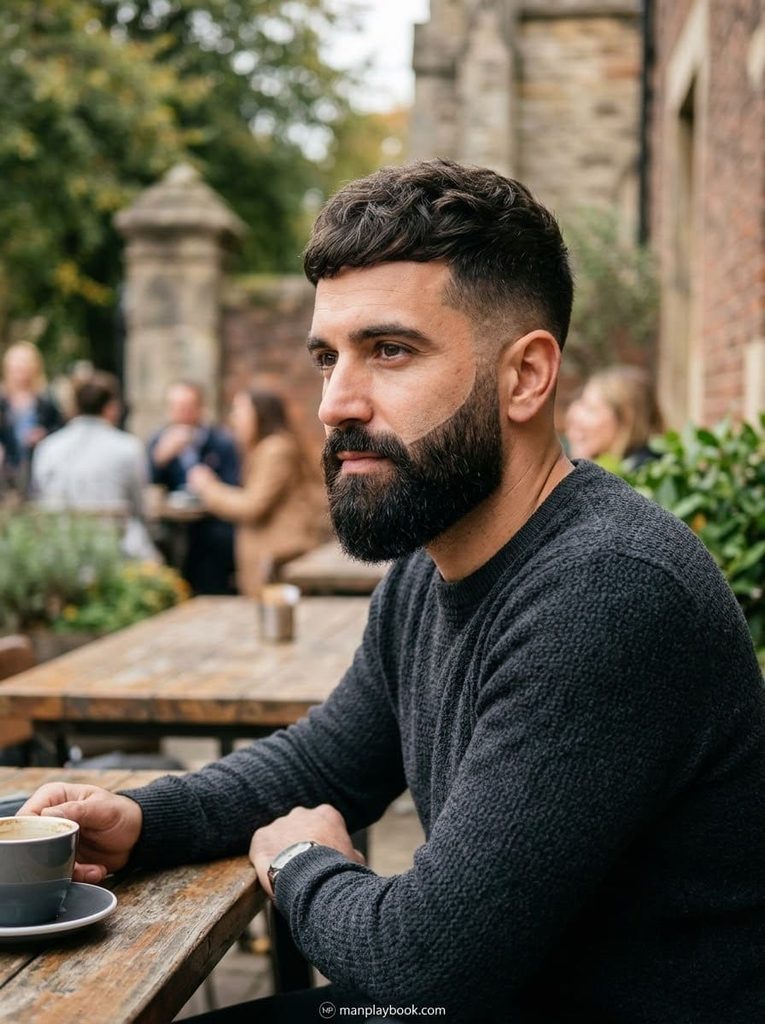
A full beard with a crisp, defined edge at the cheek and neck. Line up the beard edge the same day as the haircut so both read as one intentional look, not two separate decisions.
20. Faded beard
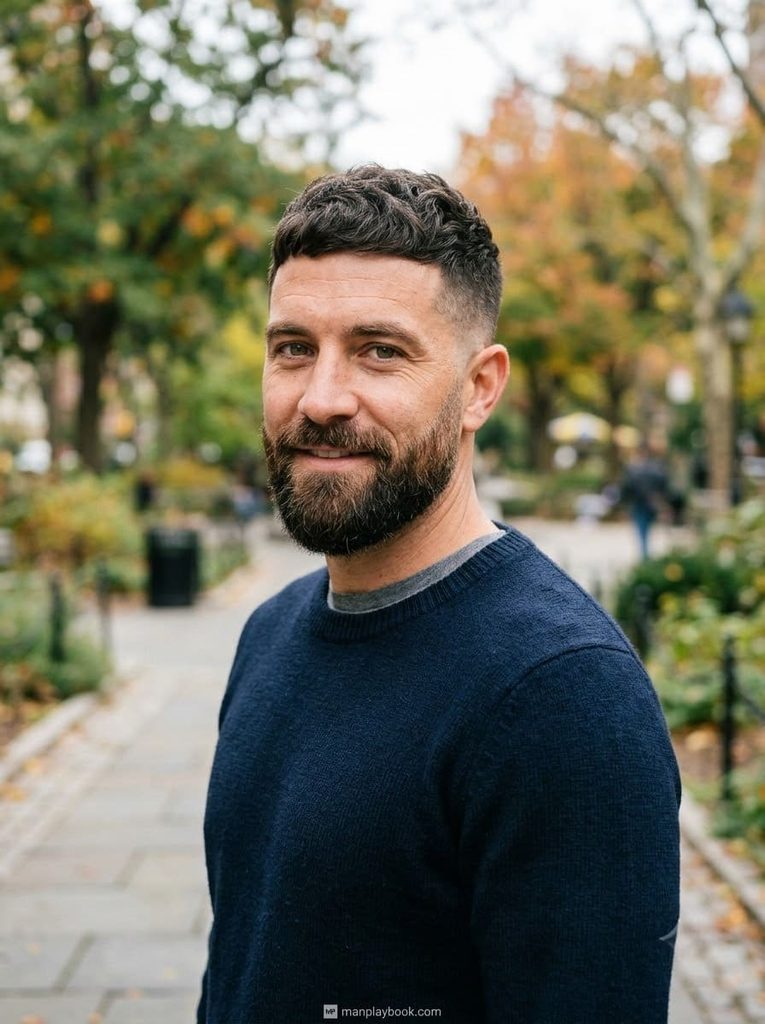
The beard fades into the sides of the haircut instead of stopping at a hard line. Ask your barber to blend the beard fade at the same guard length as the hair fade, so the two connect seamlessly.
21. Goatee

Facial hair limited to the chin and mustache, paired here with a shorter fringe for balance. A shorter fringe keeps the face from looking bottom-heavy when paired with a goatee.
22. Mustache only
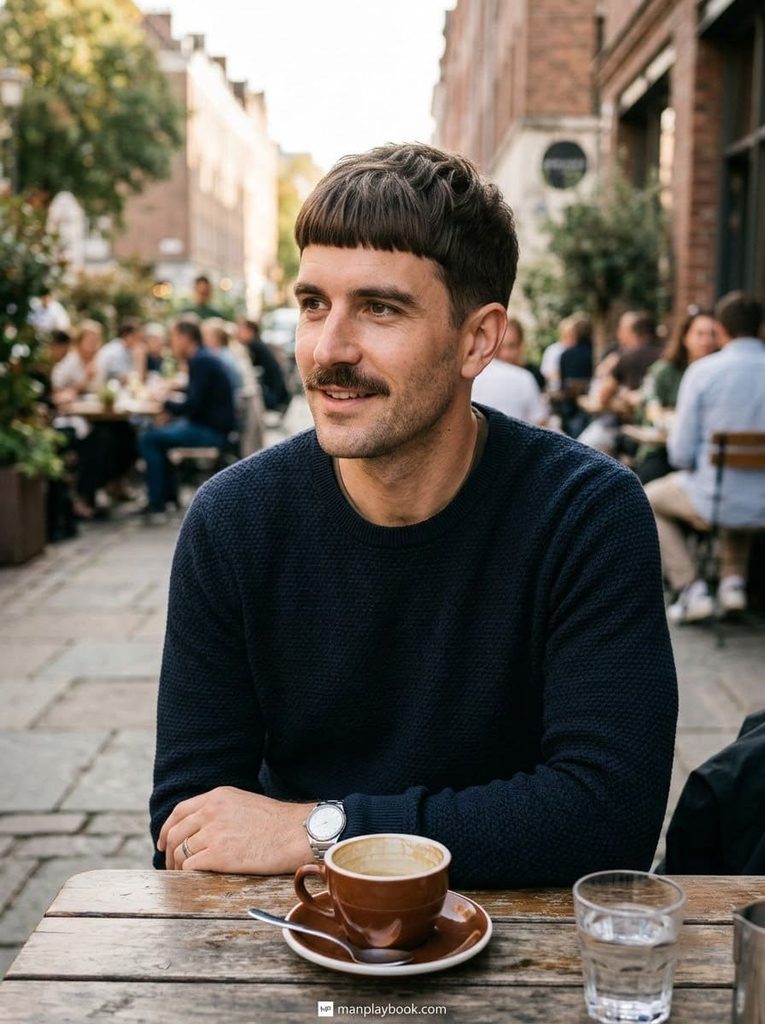
Just a mustache, no beard, paired with a classic blunt fringe for a retro-leaning look. This pairing reads most intentional with a blunt, straight-across fringe rather than a textured one.
By hair type adaptation (5 variations). The same haircut needs different starting numbers depending on hair type.
23. Straight hair
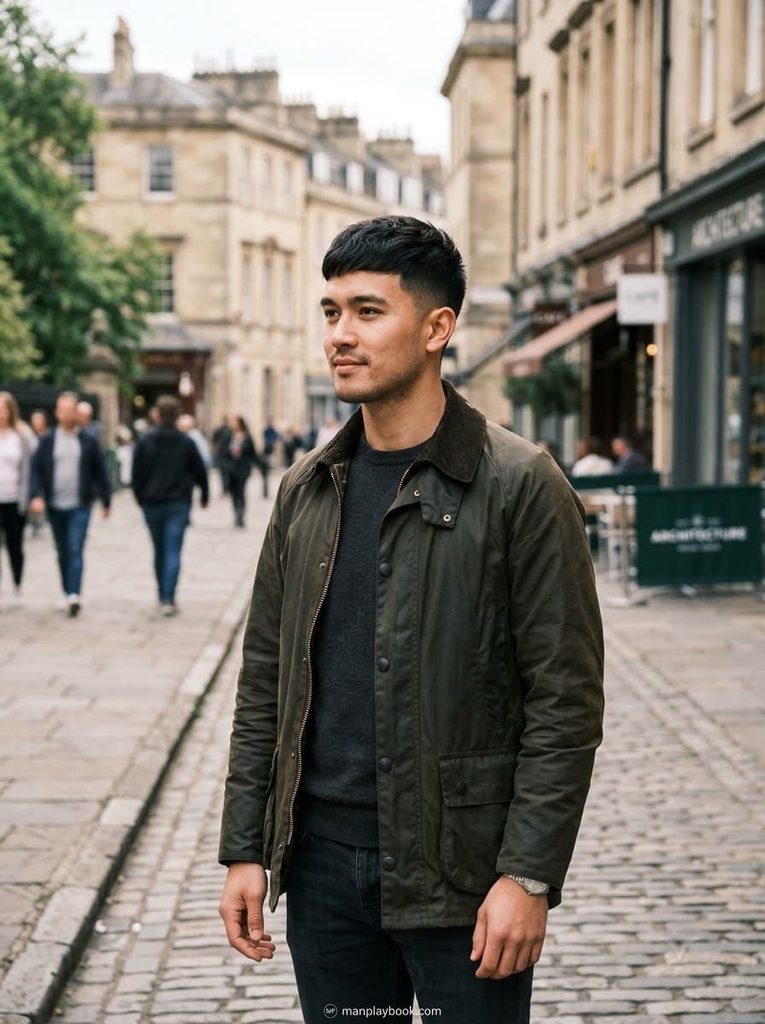
The default version this haircut is usually described around, holds the fringe shape most predictably. Standard matte clay on damp hair is enough, straight hair takes product evenly with no extra steps.
24. Wavy hair

Slightly more natural texture in the fringe than straight hair, needs a bit more product for hold. Add a light sea salt spray before the clay to help the wave hold its direction through the day.
25. Curly hair
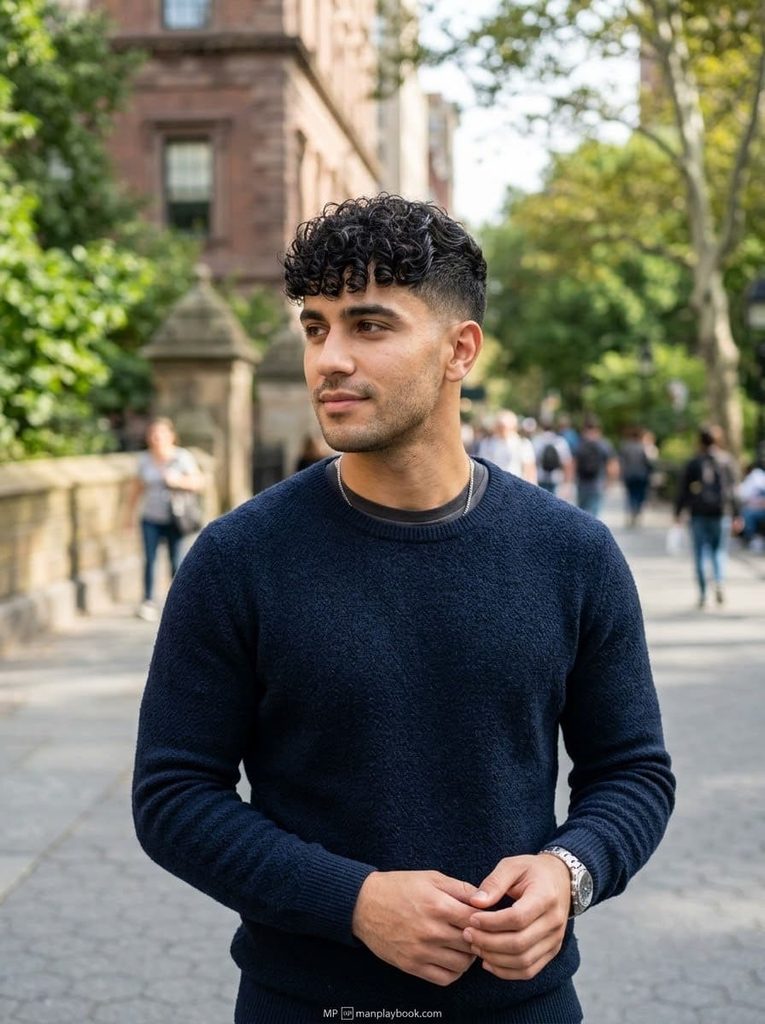
The fringe reads naturally textured without any cutting for it, curls do the texture work on their own. Use a curl-friendly cream instead of a clay-heavy product, over-drying curly hair with clay can look crunchy instead of textured.
26. Coily hair
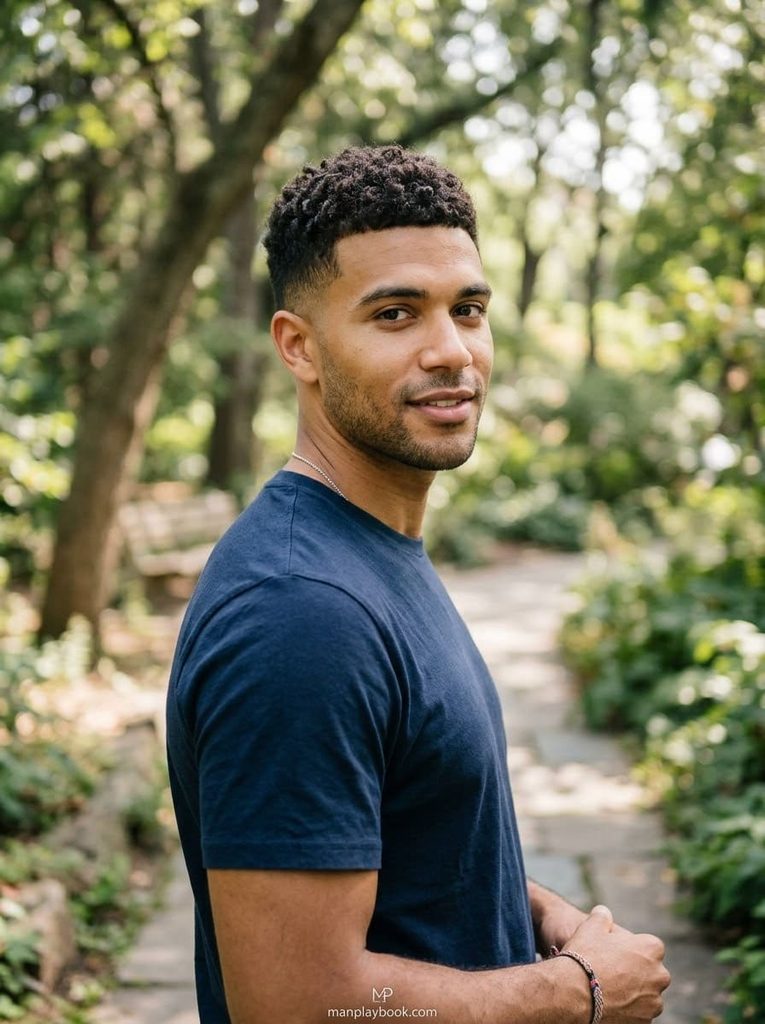
A shorter overall top works better here for easier daily styling and more predictable shape. A leave-in conditioner before any styling product keeps coily hair from drying out under daily product use.
27. Thinning hair

A shorter fringe reduces visible scalp show-through compared to a longer forward style. Skip heavy pomades, a light matte powder or clay adds texture without weighing thinning hair down flat.
By color and finish (4 variations). Color and finish change the look without changing the cut itself.
28. Natural color

The default, no color treatment, letting the cut and styling carry the look. No extra styling step needed beyond the standard clay-and-push-forward routine.
29. Subtle highlight

A highlight through the fringe only, adding dimension without a full color change. Ask a colorist for face-framing pieces limited to the top few layers, so the highlight shows when the fringe is styled forward.
30. Full color change

A complete color change, same haircut underneath, for guys wanting a bigger visual shift. Book the color and the cut on separate visits when possible, cutting freshly colored hair the same day can be harder to judge accurately.
31. Matte vs. glossy finish
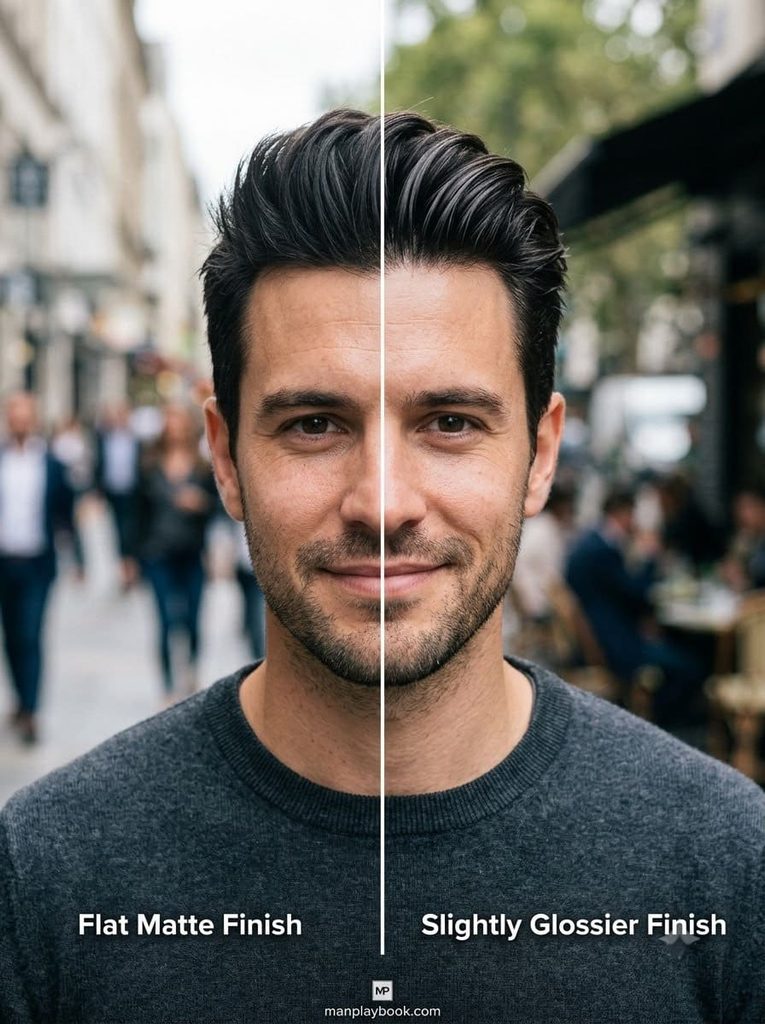
The same haircut styled with a flat matte finish versus a slightly glossier one for dressier occasions. Swap a matte clay for a light-hold gel with a subtle sheen when the occasion calls for a more polished finish.
By formality (4 variations). The same cut styled differently for different parts of the week.
32. Work-ready

A tighter fade and a cleaner, more defined fringe line for a professional setting. Comb the fringe into a crisp line instead of texturizing it loose, and keep the fade fresh on a 3-week schedule for work settings.
33. Casual weekend

Looser texture and less product, a relaxed version of the same haircut. Air-dry instead of blow-drying, and use less clay than the work-ready version, letting the fringe fall more naturally.
34. Wedding or event
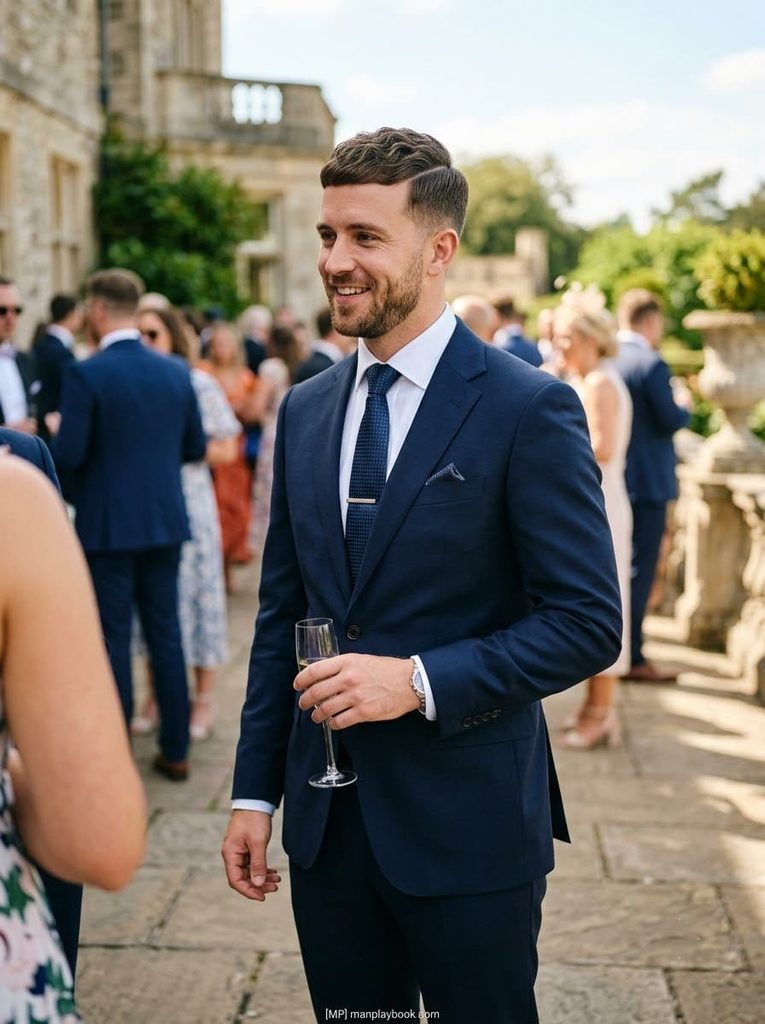
Extra hold and a more defined part for a dressier occasion that needs to hold all day. Blow-dry the fringe forward first, then add a stronger-hold paste over the clay for a finish that survives a full day of photos.
35. Gym or athletic

Styled to hold through sweat and movement without needing a full restyle afterward. A lightweight, water-resistant paste holds better through a workout than a clay, which can break down with sweat.
Real mistake people make here: picking a variation based on a photo alone without checking which category actually drives the difference, fade height, fringe style, or hair type. Two haircuts can look similar in a photo. They can still require completely different instructions to your barber.
The pattern behind it all
Every variation above still comes back to the same three parts covered at the start. Sides, top, and fringe. Changing one detail, fade height, fringe texture, or beard pairing, creates a different look. The underlying haircut stays the same.
I expected this to be mostly about finding the right photo to bring in. It’s mostly about having the right words ready before you sit down, which turned out to matter more than the photo itself.
FAQ
Is a French crop the same thing as a French fringe? Close, but not identical. A French fringe usually refers just to the front fringe detail. A French crop is the full haircut, sides, top, and fringe together.
Does this haircut work with receding hair? Sometimes, with adjustments. A shorter fringe and a slightly higher fade can work with early recession. Significant thinning at the crown usually needs a different cut entirely. Talk to your barber honestly about where your hairline actually sits.
How much does styling product matter compared to the cut itself? The cut matters more. A great cut with no product still holds a reasonable shape. Product refines the finish, but it can’t fix a fringe that was cut at the wrong length or angle in the first place.
Can I switch between these 35 variations without a full new haircut? Some, yes. Fringe styling (blunt versus textured) and beard pairing can change day to day. Fade height and hair type adaptations usually need an actual cut to switch between.
Never miss an update — choose ManPlaybook as your preferred source on Google.
How it works: Tap the button below to open Google's settings page, then check the box next to ManPlaybook.
Tap the checkbox to turn it blue — that's how you know it's set.