9 Big & Tall Clothing Mistakes You’re Probably Making (And the Real Fix)
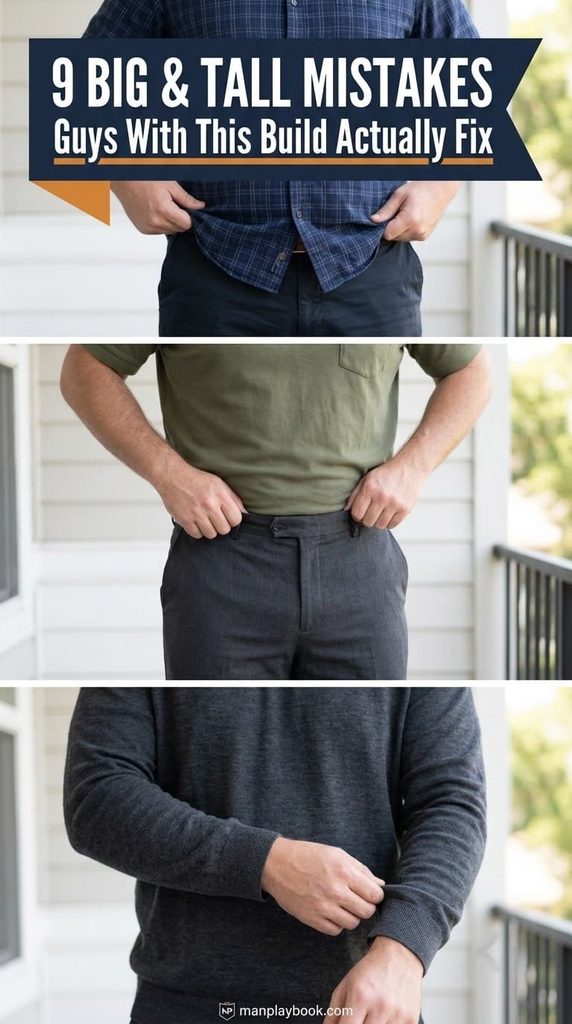
Most big and tall style advice tells you to “size up” and call it a day. That’s the first mistake on this list. Here are 9 real construction and fit errors big and tall guys make, plus the specific fix for each one.
Never miss an update — choose ManPlaybook as your preferred source on Google.
How it works: Tap the button below to open Google’s settings page, then check the box next to ManPlaybook.
Tap the checkbox to turn it blue — that’s how you know it’s set.
I’m not a big and tall guy myself. I’m short, and I went bald in my late twenties, so my own style problems ran in a different direction. But I spent years in IT learning how to find the actual root cause of a problem instead of patching the symptom, and when I started digging into big and tall dressing for this site, I found the same pattern showing up over and over: the advice out there treats “big and tall” as one word instead of two separate engineering problems.
If you’re 6’4″ and 260 pounds, a shirt sized for a 5’10” man who’s also 260 pounds is going to be tight everywhere except the sleeves, which will hang past your knuckles like you borrowed it from your dad. Most stores solve this by just making everything bigger and looser, which fixes nothing. It just moves the problem from “too tight” to “shapeless.”
I talked to a handful of guys in this build about what actually changed things for them, and I dug through construction details from brands that specialize in this frame. Nine mistakes kept surfacing. Here they are, with the actual mechanism behind each fix, not just “buy this instead.”
Quick answer
Big and tall dressing mistakes almost all trace back to one root cause: treating “bigger” as a single size adjustment instead of two separate variables (height and width) that need their own fix. A true big and tall cut adds length to the torso, sleeves, and rise independently from how much room it gives the chest and waist, while a regular shirt in a bigger size just scales everything up at once, leaving you either baggy in the body or short in the sleeve. The fix across almost every mistake below is the same: buy from a line that’s genuinely drafted for both dimensions, get the two or three adjustments a tailor can make cheaply (sleeve, hem, taper), and stop treating “fits” and “covers” as the same word.
1. Buying “bigger” instead of “big and tall”
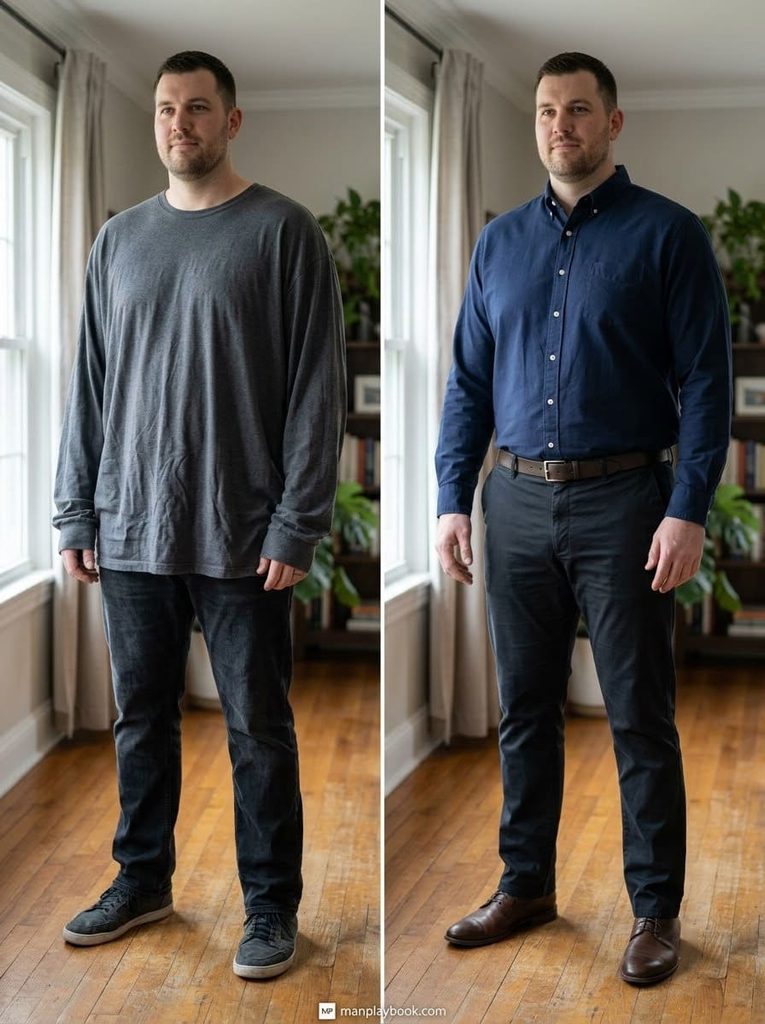
This is the mistake that causes half the others on this list. When a shirt runs small, the instinct is to size up. But a regular shirt sized up scales the chest, the sleeve, and the body length by the same percentage, because that’s how a standard grading block works.
Your body doesn’t scale that way. A 6’5″ guy with a 46-inch chest doesn’t need a shirt that’s 20% bigger everywhere. He needs a shirt that’s meaningfully longer in the torso and sleeve and only somewhat wider in the chest.
Brian Reaves, COO and Executive Vice President of DXL, put it plainly in an interview with Retail Dive: “Big and tall is all we do, but uniquely different than other stores, our fit is spec-ed by size and garment and for each size. We don’t just scale up product from a regular fit like most other retailers.” That’s the whole mistake on this list, in one sentence, from someone who runs a company that only sells this size range.
The fix: shop lines that draft big and tall as its own pattern block, not a scaled-up regular size. DXL, Bonobos Big & Tall, and Todd Snyder’s extended sizing all cut torso length and sleeve length separately from chest width, which is the entire point of a real big and tall block. DXL’s own size guide is a good template for what to look for, it lists rise, sleeve length, and torso length as their own separate numbers, not just S/M/L/XL.
Common mistake within the mistake: guys buy 2XL because their chest is 2XL, then get it tailored down at the waist instead of buying a size built for their actual proportions and needing zero alterations. That’s backwards and it costs more in tailoring than the shirt saved.
Real pick: BEFRIED Big and Tall Dress Shirt, XL Big to 6XL Big Tall is one of the few shirts that actually lists Big and Big Tall as separate sizes instead of one blended size run. Check the size chart tab on the product page for the exact sleeve and body length numbers before ordering, they vary by size.
2. Wearing your pants below your natural waist
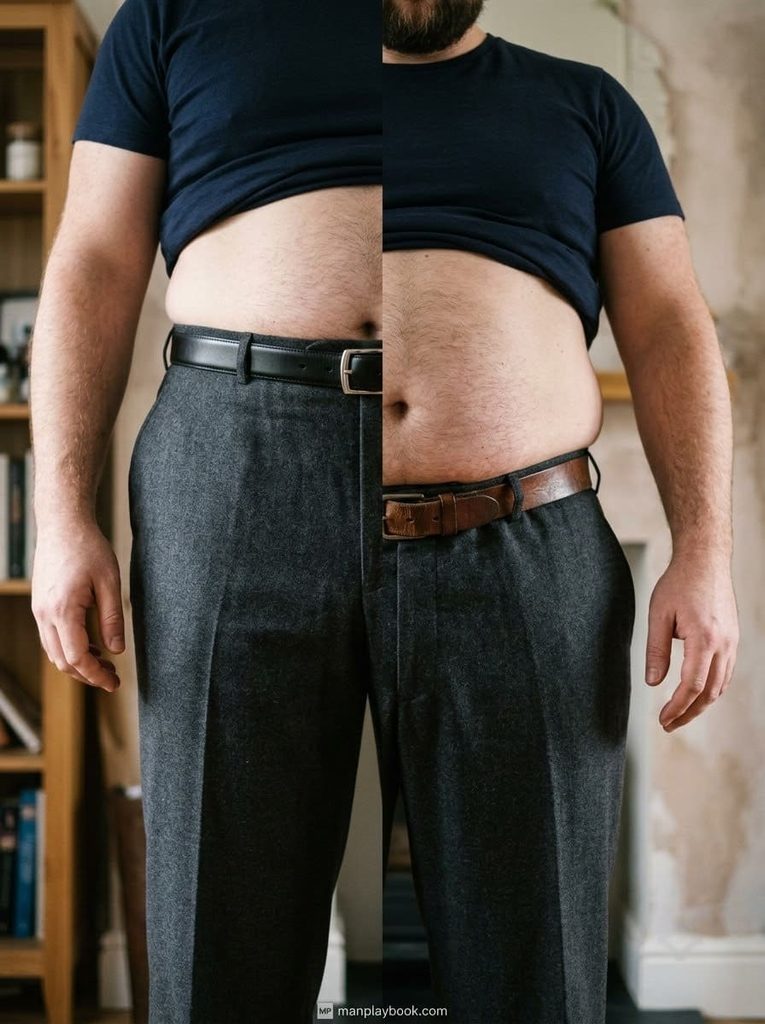
Low-rise pants look fine on a slim build. On a bigger frame, a low rise sits below the widest part of your midsection, which means the belt has to cinch in under the belly to keep the pants up. That cinch creates a shelf, and everything above the belt line pushes out over it.
The fix: a rise that sits at or near your natural waist lets the fabric fall in a straight line down the front instead of folding over a belt. This isn’t a slimming trick, it’s just physics: fabric anchored above your widest point drapes down and past it, fabric anchored below your widest point has nowhere to go but out.
Mechanism, not opinion: a mid or high rise gives the fabric enough vertical room to clear the stomach before it needs to taper in. Big and tall lines list a front rise measurement right on the product page, and that’s the number to actually check before buying, not the photo on the model, since the same “34-inch waist” label can come with a completely different rise depending on the cut.

Lists Big and Big Tall as separate sizes instead of one blended run. Fixes mistake #1, buying "bigger" instead of "big and tall."
Shop NowThis post contains affiliate links. We may earn a commission on qualifying purchases at no extra cost to you.
Real pick: Wrangler Authentics Comfort Flex Waist Relaxed Fit Jean runs up to a 46-inch waist and the comfort waistband sits at the natural waist instead of a low-rise cut, which is the exact fix this mistake is about.
3. Skinny accessories on a big frame
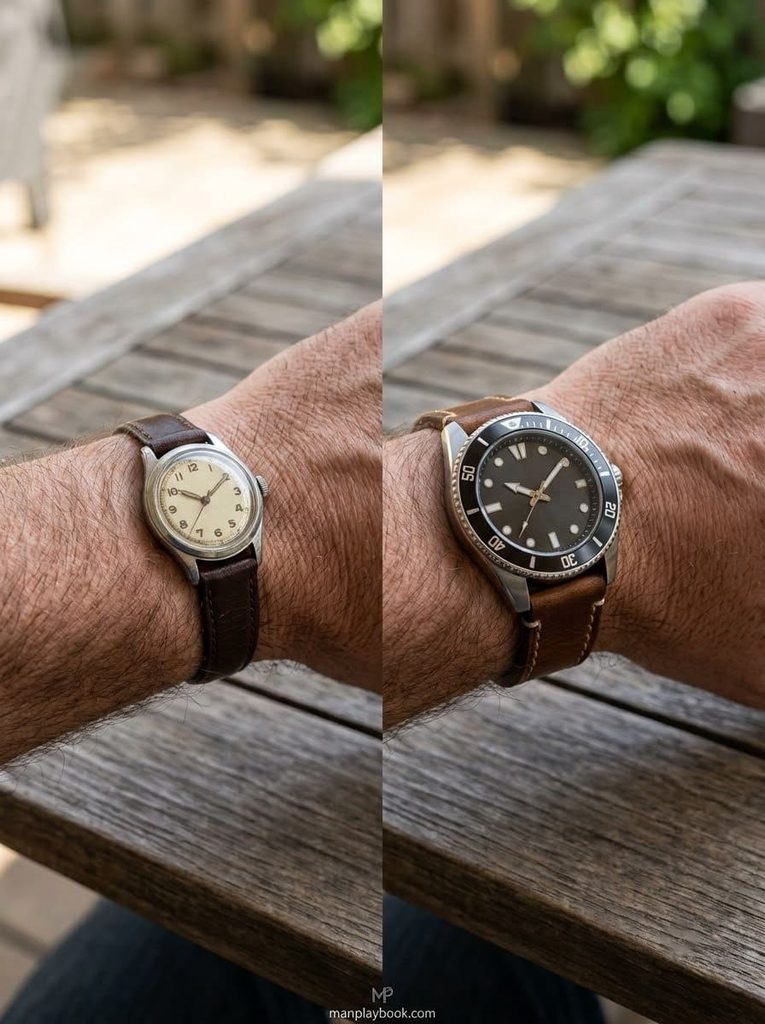
A slim leather cord watch strap or a 1-inch dress belt looks proportionate on a smaller wrist and waist. On a bigger frame, the same accessory reads as undersized, the same way a golf pencil looks tiny next to a large hand.
The fix: scale accessories to your frame. A 1.5-inch belt, a watch case 42mm or larger, and a slightly wider tie knot (half-Windsor instead of a skinny four-in-hand) all read as proportionate instead of pinched. This is one of those rules nobody explains the “why” on, so here it is: the eye reads size by comparison, and a small accessory next to a big frame just makes the frame look bigger by contrast, not smaller.
Real pick: VRLEGEND Big and Tall Leather Belt, sized up to a 70-inch waist is built at true big and tall widths instead of stretched at the last hole on a regular-length belt.
4. Chasing “slimming” instead of “fitting”
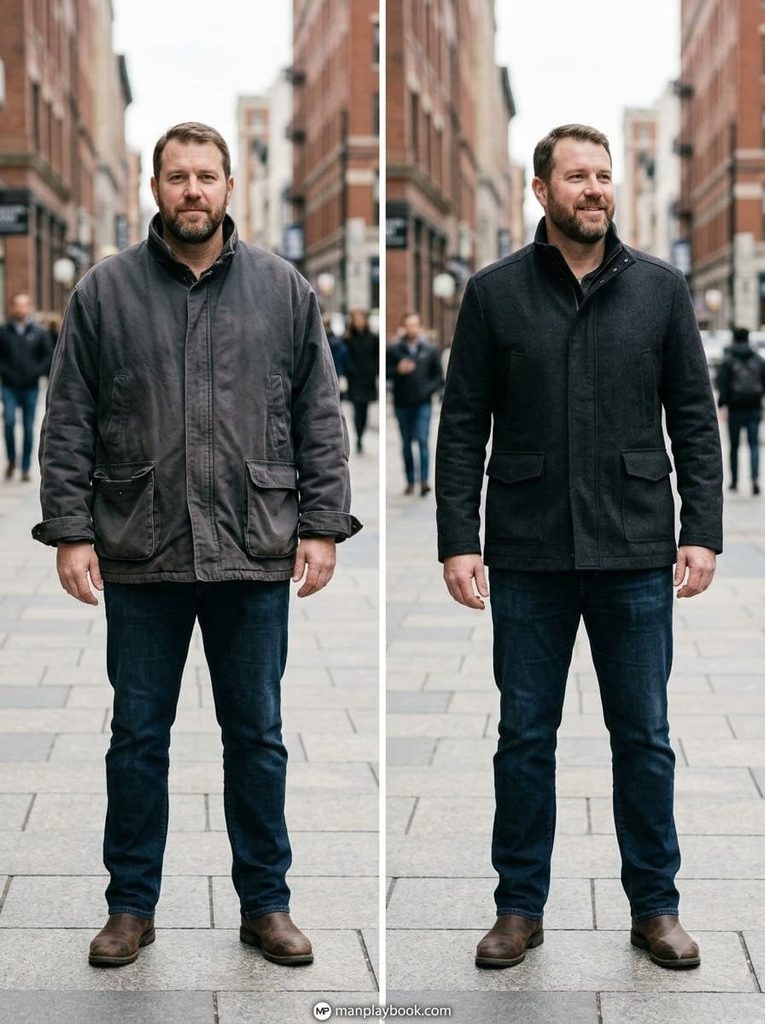
A lot of big and tall advice leads with words like slimming, hiding, or camouflage. That framing sends guys toward baggy, dark, shapeless clothing that supposedly “hides” the body.
Here’s the problem. Loose fabric doesn’t hide size, it adds visual bulk on top of the size that’s already there. A tent-shaped jacket has more total fabric than a structured one, and more fabric moving loosely around a body reads as bigger, not smaller.
The fix: stop optimizing for “smaller looking” and optimize for “fitted correctly.” A jacket that follows your actual shoulder line, tapers at the waist, and doesn’t billow when you move will look sharper and, honestly, smaller than a baggy one, but that’s a side effect of good fit, not the goal itself. I think this reframe matters more than any single garment choice on this list.
5. Loud, busy, all-over prints
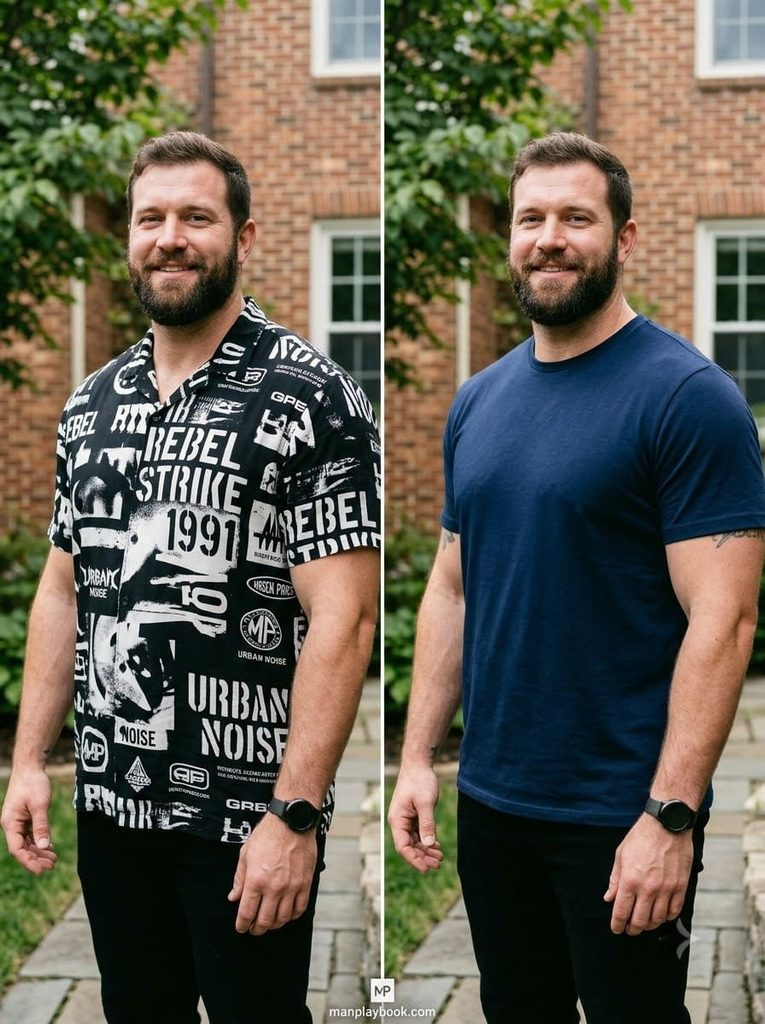
A bold graphic print or a wide plaid that would look fine on a smaller torso gets stretched across more surface area on a bigger frame, which makes the pattern read louder and more chaotic than it did on the hanger.
The fix: solid colors and small, tight patterns (a fine herringbone, a subtle micro-check) do the heavy lifting here. It’s not that big and tall guys can’t wear pattern, it’s that a pattern’s visual “loudness” scales with the amount of fabric it’s printed on, so the same print looks twice as busy at a 48 chest as it does at a 38.
Variant note: if you genuinely love a bold print, keep it to one piece (a shirt, not a shirt and pants both) and pair it with solids everywhere else, so the eye has somewhere to rest.
6. Shirts that untuck themselves by lunchtime
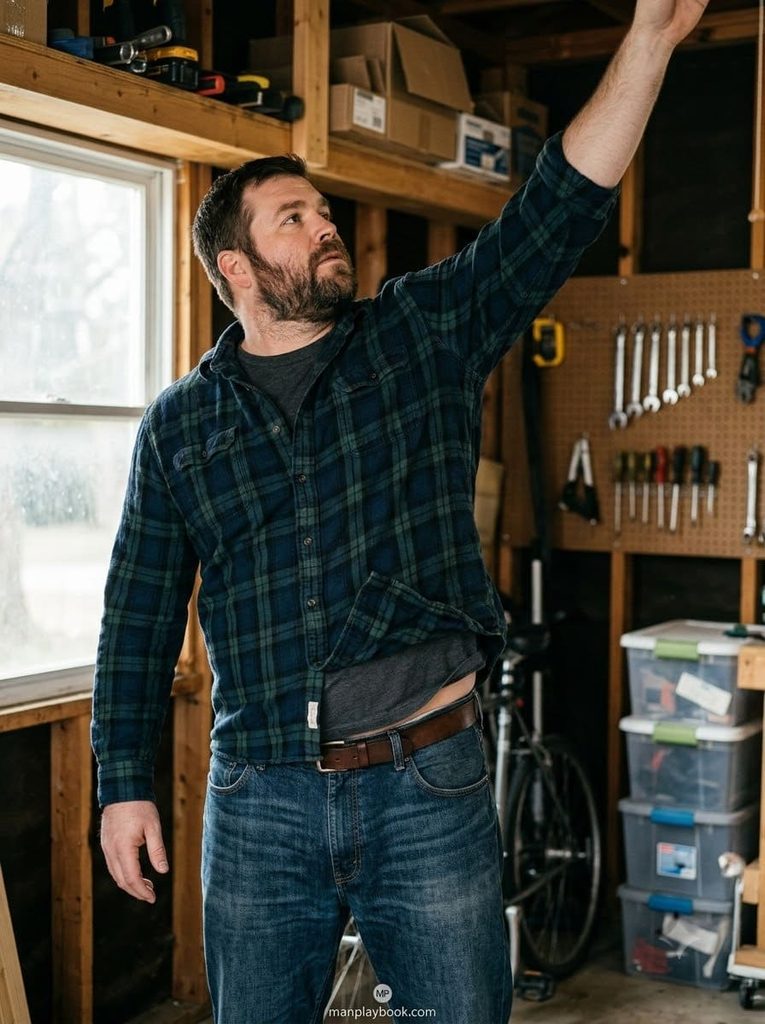
If your shirt keeps creeping out of your pants by early afternoon, that’s not a static-cling problem, it’s a length problem. Shirts cut for a regular torso are too short to stay tucked once you sit, reach, or bend on a taller frame, because the fabric runs out before it reaches back down past your waistband.
The fix: a true big and tall shirt adds 2-4 extra inches of length specifically in the tail, not just overall length. That extra tail is what stays anchored in your waistband through a full day of moving around, not a tucking technique.
Real mistake people make here: buying a longer shirt in the wrong size to fix this, which just adds length to the collar-to-hem measurement instead of the tail specifically, so the shirt gets baggier through the body without actually staying tucked any better.
7. Sleeves that stop above the wristbone
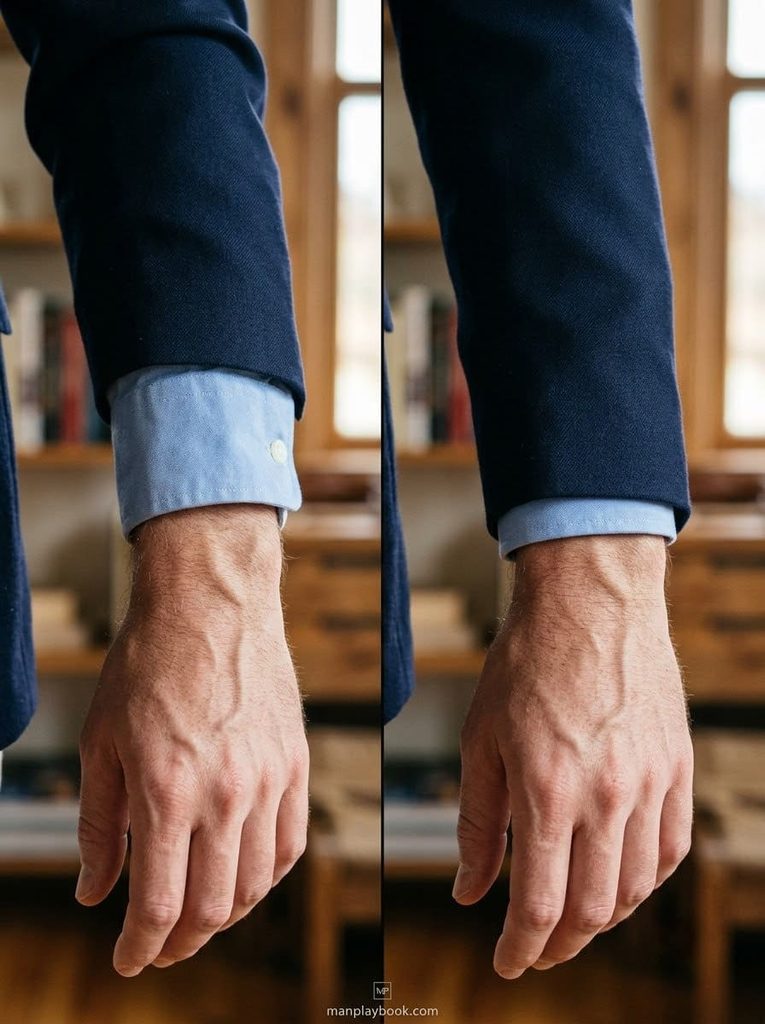
Also called “high water” sleeves. This happens for the same core reason as mistake #1: a regular-block shirt or jacket sized up for chest width doesn’t add proportional sleeve length, so the sleeve stops an inch or two short of where it should land, right at the wristbone with the cuff button visible past it.
Kavah King, a big-and-tall model and fashion blogger at The Gentlemen’s Curb, told Retail Dive that too many brands rush extended sizing without fixing this. “Some brands are extremely quick to offer ‘extended sizes,’ but haven’t done enough research and appeal to only one body type. Some men are bigger than others. Some men are taller than others. We all have different bodies and that should definitely be taken into consideration.” Sleeve length is exactly the detail that gets skipped when a brand just adds width and calls it done.
The fix: sleeve length is one of the cheapest and most reliable tailoring fixes that exists, usually $15-25 at a local tailor, and it makes more visible difference than almost anything else on this list. But it’s cheaper still to buy a big and tall cut that already lists sleeve length as its own size number and get it right the first time.
8. Stiff, heavy fabric that boxes instead of drapes
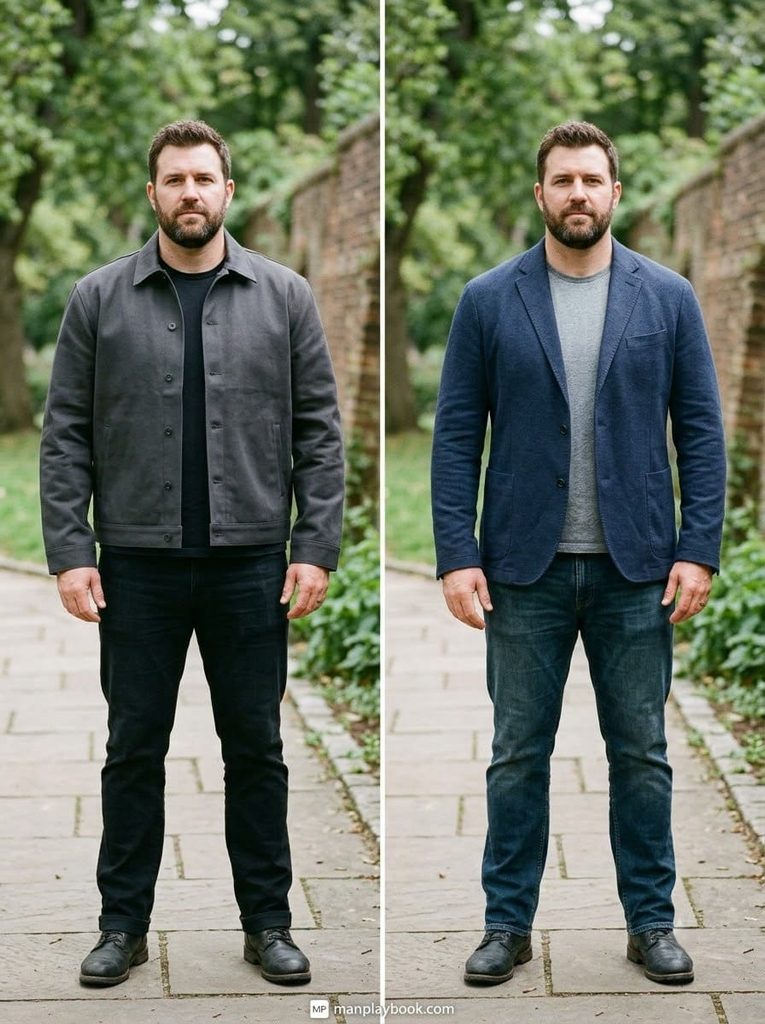
A heavier, stiffer fabric holds its shape more, which sounds like it should help structure a bigger frame. In practice, stiff fabric doesn’t move with the body, it sits away from it in a boxy shape that can actually add visual width, especially around the shoulders and upper arms.
The fix: a mid-weight fabric with some natural drape (a lighter wool blend, a brushed cotton, a jersey knit for casual pieces) follows the body’s actual lines instead of standing off it. This is a real construction difference, not a marketing term. Textile labs measure this with the ASTM D1388 cantilever bend test, which checks how far a fabric strip bends under its own weight, and a lower-stiffness result on that test is what “drape” actually means in fabric terms, not a vague marketing word.
Tiered version: if budget only allows one upgrade, spend it on the jacket or blazer fabric first, since that’s the single largest piece of fabric on your frame and where stiffness shows up most.
9. Single-vent jackets that pull open when you sit or move
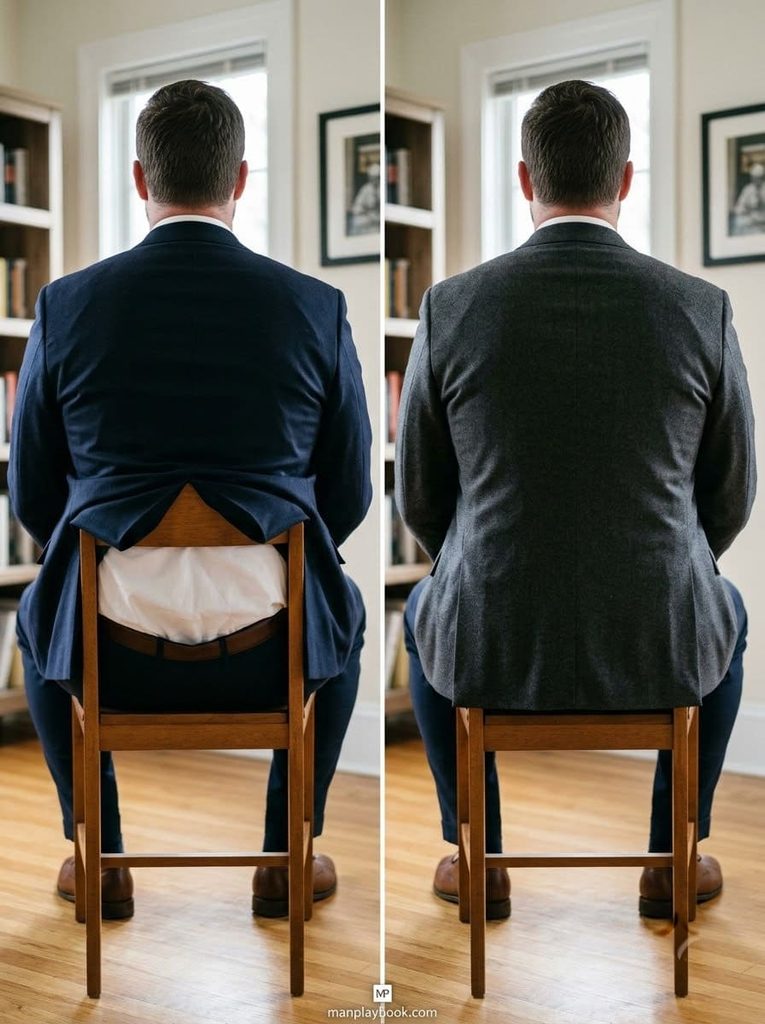
A jacket with one vent in the back center is the default on most off-the-rack suits and blazers. On a broader frame, sitting down or reaching for something pulls that single vent open wide, showing the shirt underneath and creating an unflattering gap right at the widest part of your back.
The fix: a double-vented jacket (two vents, one on each side) gives the fabric room to flex on both sides independently, so sitting or moving opens each vent only slightly instead of splitting one seam wide open. Per the Custom Tailors & Designers Association, the trade body for made-to-measure tailors, double vents let tension distribute across both sides of the back instead of pulling against one center seam, which is exactly why the style became standard on broader, more active builds.
The pattern behind all nine
And if there’s one thing I’d want you to walk away with, it’s this: almost every mistake on this list comes from treating “big and tall” as a bigger version of a regular size instead of its own separate set of measurements. Height affects length (torso, sleeve, rise, tail). Width affects room (chest, shoulder, thigh). A garment that’s actually drafted for both, instead of scaled up from one regular block, solves most of this automatically.
I’ll be honest, I went into this research expecting the fix to be more about color and cut choices. It’s mostly about construction numbers you can actually check on a size chart before you buy, which is kind of a relief, because that’s a system, and systems are the thing I actually know how to build.
FAQs
Do big and tall guys need to avoid all patterns? No. Small, tight patterns like a fine herringbone or micro-check work fine because the pattern doesn’t get visually stretched the way a bold, wide-spaced print does across more fabric.
Is tailoring worth it if I already bought regular-sized clothes? For sleeve length and hemming, usually yes, it’s a cheap, high-impact fix. For torso length or tail length, it’s often cheaper and more reliable to just buy a true big and tall cut next time, since there’s a limit to how much length a tailor can add.
What’s the single highest-impact fix on this list? Rise and shirt tail length. Both are invisible on a hanger but show up constantly through a normal day of sitting, reaching, and moving, which is exactly when a wrong fit becomes obvious.
Products We Recommend
This post contains affiliate links. We may earn a commission on qualifying purchases at no extra cost to you.
BEFRIED Big and Tall Dress Shirt, XL Big to 6XL Big Tall
Lists Big and Big Tall as separate sizes instead of one blended run. Fixes mistake #1, buying "bigger" instead of "big and tall."
Shop Now
Wrangler Authentics Comfort Flex Waist Relaxed Fit Jean
Runs up to a 46-inch waist with a comfort waistband that sits at the natural waist instead of low-rise. Fixes mistake #2, wearing pants below your natural waist.
Shop now
VRLEGEND Big and Tall Leather Belt, up to a 70-inch waist
Built at true big and tall widths instead of stretched at the last hole on a regular-length belt. Fixes mistake #3, skinny accessories on a big frame.
Shop nowNever miss an update — choose ManPlaybook as your preferred source on Google.
How it works: Tap the button below to open Google's settings page, then check the box next to ManPlaybook.
Tap the checkbox to turn it blue — that's how you know it's set.